The Krychow Labor and Concentration Camp
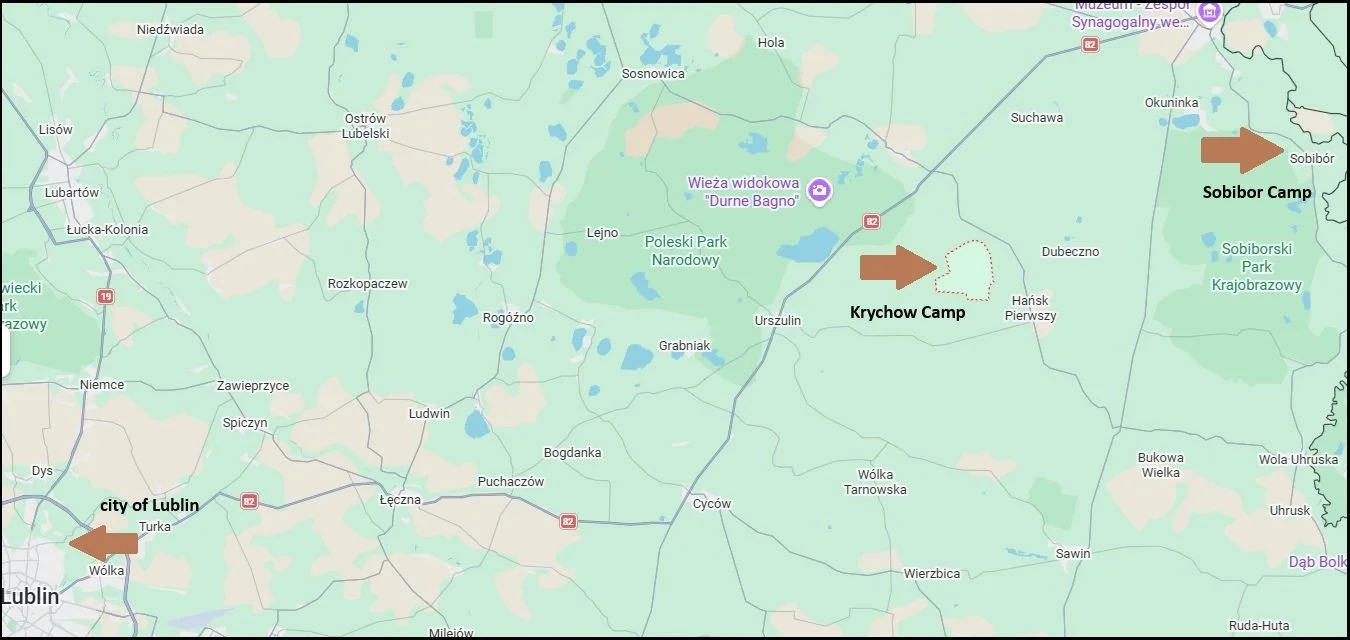
In the spring of 1940, a labor camp with Jewish slave labor was established in the village of Krychów, near Hańsk and Wlodawa, in the Lublin district, eastern Poland. Krychów is located at the heart of Pojezierze Łęczyńsko-Włodawskie — which is characterized by profusion of marshlands and meadows. Due to this, there is less arable land at this location than in other areas of the central-Polish lowland. Another name for this area is Krowie Bagno.
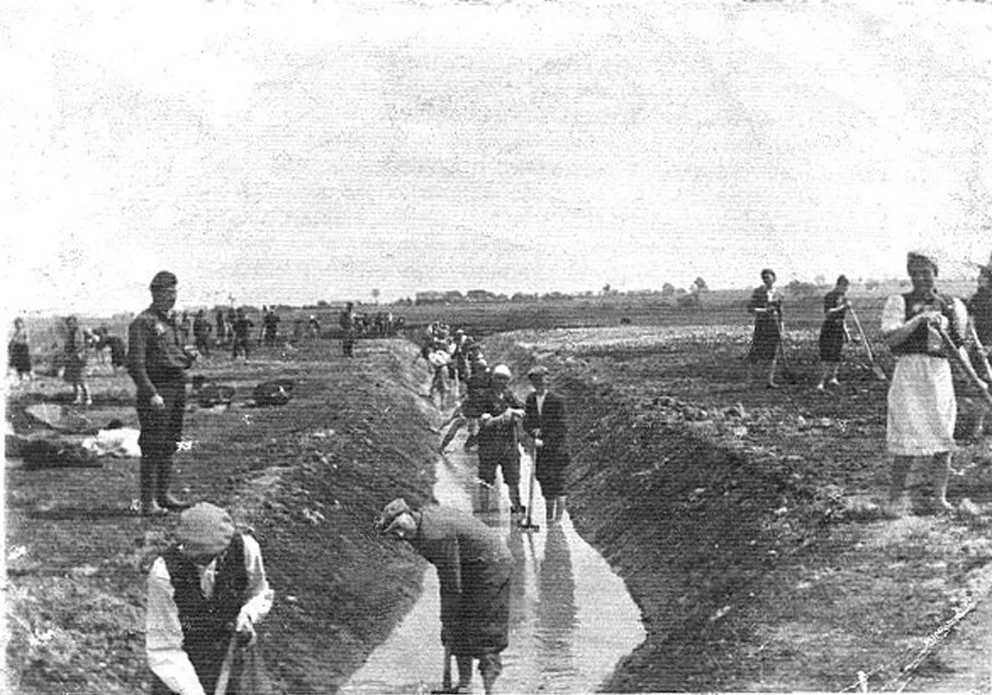
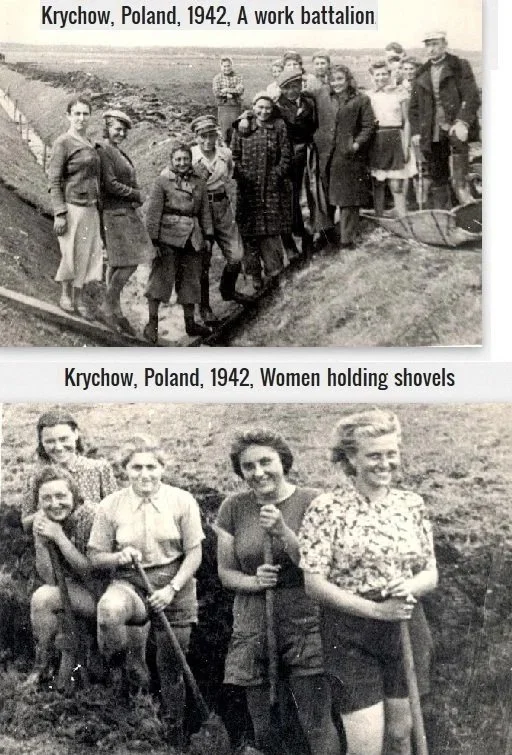
Jewish prisoners, including those from local areas and deportees from the Czech Republic, Slovakia, Austria, and Germany, were forced to work on projects such as regulating the Uherka River and building irrigation channels. According to the Archives of the Polish Prosecutor’s Office at Lublin, the first group of Jewish workers at Krychow were transported from Warsaw in August of 1940. Prior to this, a group of Sinti and Roma transports were sent there from Hamburg as well as a transport from the nearby Belzec labor camp (before it was a Death Center). The Gypsy group included between 1,000 and 1,500 people. According to the statements by Polish witnesses from Hansk, the Sinti and Roma could not speak Polish and they tried to exchange their clothes for food. Most of them died at Krychow. On June 1, 1941, at least 120 Jews from Wojsławice Ghetto were deported to Krychow.
The average number of inmates was between 1,000 and 1,200 people, but over the camp's existence, more than 20,000 prisoners passed through, with estimates suggesting over half perished due to exhaustion, disease, and brutal treatment by guards. In the middle of April 1942, as construction of the Sobibor camp was nearly complete, a group of Jews, mostly women, was taken from Krychow to make sure the gas chambers would work properly at Sobibor.
After Sobibor had become fully operational, regular transports with 200-500 deportees left Krychów for the death camp in May of 1942, again in June of 1942 and subsequently on a monthly basis until December 1942 (source: Yad Vashem).
During the liquidation of the camp — around April 1943 and in subsequent Aktionen — many prisoners were deported to the nearby Sobibór extermination camp. On August 16, 1943, there was a revolt by prisoners at Krychow. Little information is known on the revolt as it was probably squelched by the surrounding S.S.
In November 1943, approximately 1,500 prisoners from Krychów were murdered as part of "Aktion Erntefest" (Operation Harvest Festival). According to historian Yitzchak Arad, "The Jews from Krychów were murdered under the supervision of S.S. Hauptsturmführer Richard Thomalla and S.S. Hauptsturmführer Franz Stangl, both from the Operation Reinhard staff of S.S. and Police Leader Odilo Globočnik in Lublin.” The primary operators of the daily operations at the camp were Nazi S.S. men Theodor van Eupen and Johannes Löffler (from Chemnitz district). Van Eupen was killed by partisans near Jędrzejów on December 11, 1944.