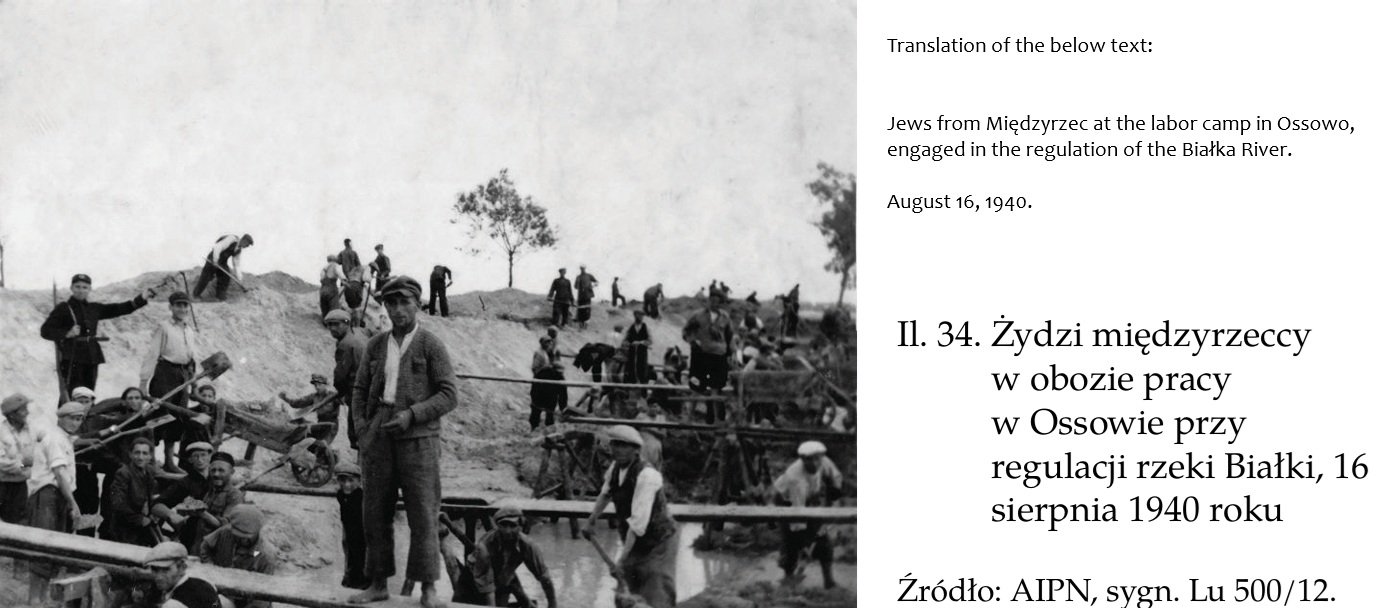
Listing of Labor Camps in the Lublin District During the Holocaust
Below is a listing of forced labor camps (excluding the death camps Sobibor, Majdanek, and Belzec) in the Lublin district, eastern Poland, where Jews were murdered during the Shoah. The listing is not complete because testimony regarding these camps is limited and there has not been extensive research regarding these locations available in English.
There were 491 labor camps established in General Government, of which 154 were situated in Lublin district. By December 1942, still 20,000 Jews from the Lublin district were living in the district. In addition to Jews from eastern Poland, large groups of Jews from outside of Poland were transported into the Lublin district, and to many of these labor camps, beginning in 1940. Few survived.
Each area in Lublin district had its own district chief (later called Gouverneur), in charge of their jurisdiction. Frank's administration had 12 governmental departments, each headed by a civil servant. Large cities were ruled by a mayor (Stadthauptmann). District chief of Lublin Ernst Zoerner eventually grew the German administration in Lublin district to more than 700 Nazis. On November 9, 1939, Heinrich Himmler appointed Odilo Globocnik the S.S. and Police Leader in the Lublin district of the General Government territory. At a two-hour meeting with Himmler on October 13, 1941, Globocnik received verbal approval to start construction work on the Belzec extermination camp, the first of its kind. Globocnik continued in his position, the chief exterminator of the Jews, until August 1943, when he was succeeded by Jakob Sporrenberg. In November, 1943, Sporrenberg and F. Wilhelm Krueger organized the Operation "Harvest Festival" (Aktion Erntefest), which effectively removed almost all Jews from the Lublin district via mass extermination. This action was ordered as revenge for the Jewish revolts and escapes from Treblinka and Sobibor extermination camps. The Aktion Erntefest murders of 44,000 Jews in November of 1943 took place at Majdanek, Dorohucza, Naleczow, Poniatowa and Trawniki camps.
The ten counties of the district were: Lublin (Land), Pulawy, Radzyn, Biala Podlaska, Chelm, Hrubieszow, Zamosc, Bilgoraj, Janow Lubelski, and Krasnystaw.
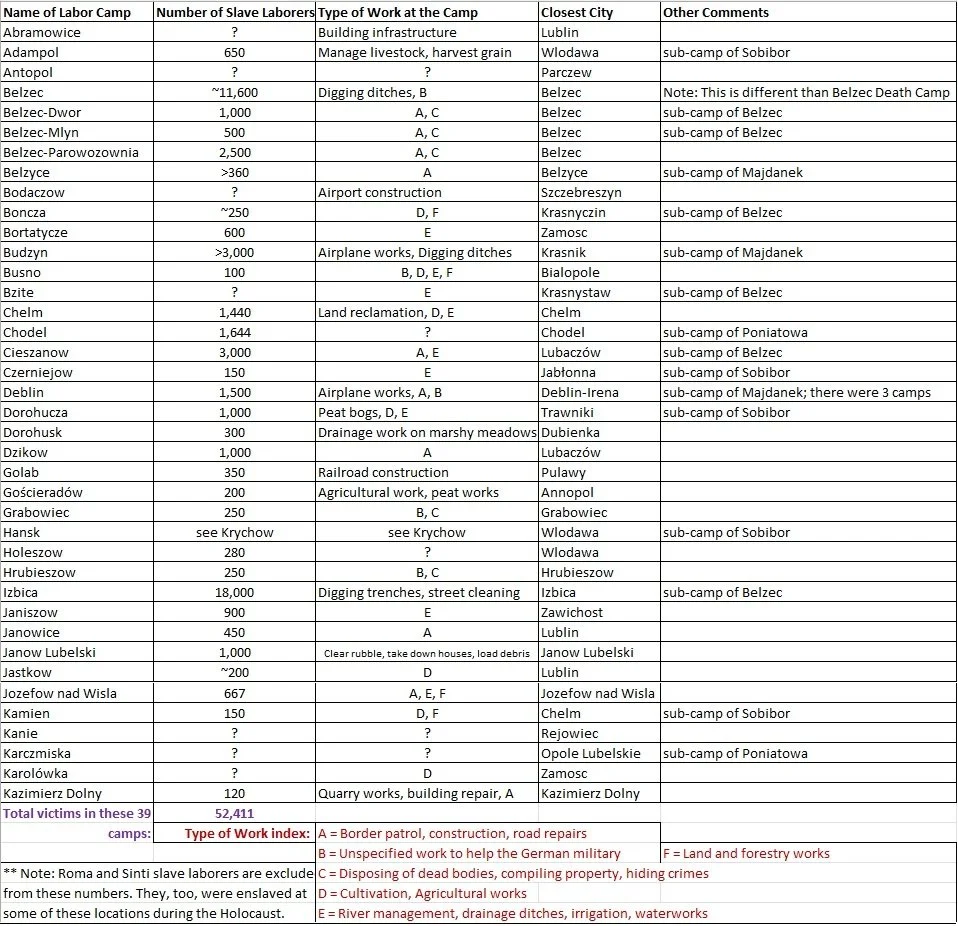
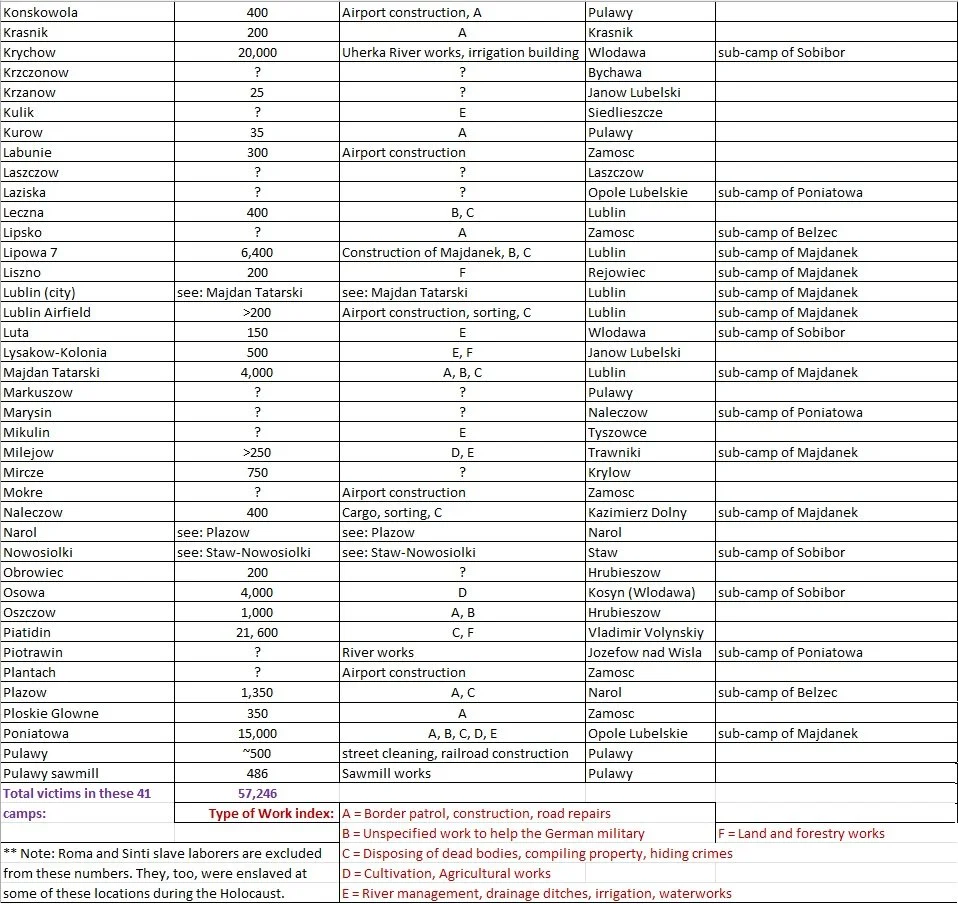
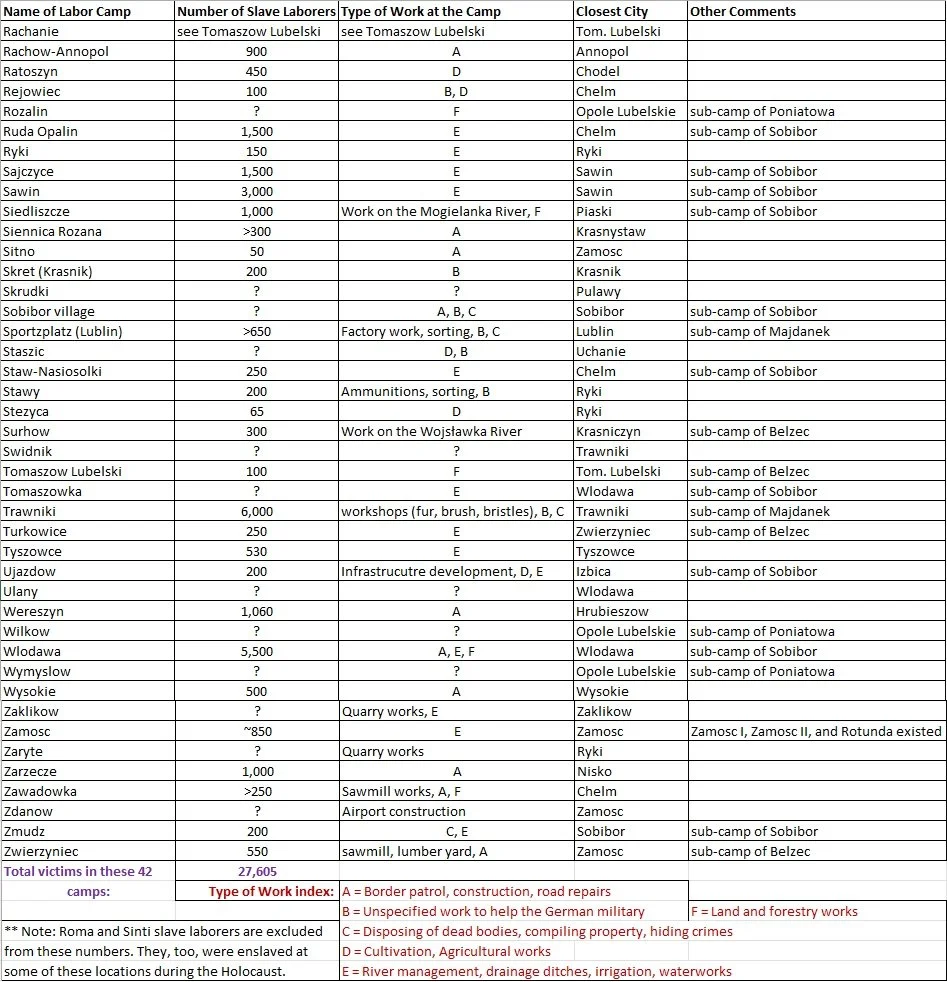
Labor Camps near Radzyn Podlaski and Lukow
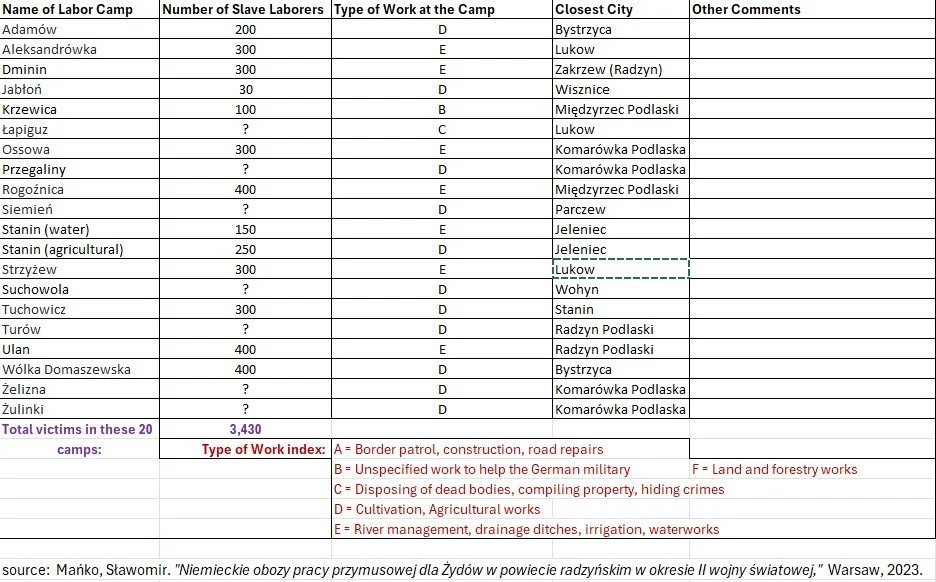
The above labor camps were located in Radzyn Podlaski district, near the cities of Komarowka Podlaska, Lukow, Miedryrzec Podlaski, Parczew, Wisznice and Wohyn.
Additional Links:
• Belzec Death Camp
• Sub-camps of Belzec Death Camp
• Dorohucza Concentration Camp
• Majdanek Death Camp
• Sub-camps of Majdanek Death Camp
• Poniatowa Death Camp
• Sub-camps of Poniatowa Death Camp
• Sobibor Death Camp
• Sub-camps of Sobibor Death Camp
• Trawniki Death Camp
• Budzyn Labor Camp
• Janiszow Labor Camp
• Krasnik/Skret Labor Camp
• Krychow Labor Camp
Abramowice Adampol Antopol Belzec Belzec-Dwor Belzec-Mlyn Belzec-Parowozownia Belzyce Boncza Bortatycze Budzyn Busno Bzite Chelm Chodel Cieszanow Czerniejow Deblin Dorohucza Dorohusk Dzikow Golab Gościeradów Hansk Holeszow Hrubieszow Izbica Janiszow Janowice Jastkow Jozefow nad Wisla Kamien Kanie Karczminska Karolówka Kazimierz Dolny Lublin Wlodawa Parczew Belzec Belzyce Krasnyczin Zamosc Krasnik Bialopole Krasnystaw Chelm Chodel Lubaczów Jabłonna Deblin-Irena Trawniki Lubaczów Pulawy Annopol Wlodawa Wlodawa Hrubieszow Izbica Zawichost Lublin Lublin Jozefow nad Wisla Chelm Rejowiec Opole Lubelskie Zamosc Klemensow Konskowola Krychow Krzczonow Krzanow Kulik Kurow Labunie Laziska Leczna Lipsko Lipowa 7 Liszno Lublin (city) Lublin Airfield Luta Lysakow Majdan Tatarski Markuszow Marysin Milejow Mircze Mokre Naleczow Nowosiolki Obrowiec Osowa Oszczow Piatidin Piotrawin Plantach Plazow Ploskie Glowne Poniatowa Pulawy Bychawa Janow Lubelski Siedlieszcze Pulawy Rejowiec Lublin Lublin Wlodawa Janow Lubelski Lublin Pulawy Naleczow Trawniki Krylow Zamosc Staw Hrubieszow Kosyn (Wlodawa) Hrubieszow Vladimir Volynskiy Ludmir Jozefow nad Wisla Rachanie Rachow-Annopol Rejowiec Rossosz Rozalin Ruda Opalin Ryki Sajczyce Sawin Siedliszcze Siennica Rozana Sitno Skrudki Sobibor village Sportzplatz (Lublin) Staw-Nasiosolki Stawy Stazyn Stezyca Surhow Swidnik Tomaszow Lubelski Tomaszowka Trawniki Turkowice Tyszowce Ujazdow Ulany Wereszyn Wilkow Wlodawa Wymyslow Wysokie Zaklikow Zamosc Zaryte Zarzecze Zawadowka Zdanow Zmudz Zwierzyniec Zwierzyniec Tyszowce Nisko Annopol Krasniczyn Pulawy Adamów Aleksandrówka Dminin Jabłoń Krzewica Łapiguz Ossowa Przegaliny Rogoźnica Siemień Stanin (water) Stanin (agricultural) Strzyżew Suchowola Tuchowicz Turów Ulan Wólka Domaszewska Żelizna Żulinki Bystrzyca Lukow Zakrzew Wisznice Międzyrzec Podlaski Komarówka Podlaska Parczew Jeleniec Wohyn Stanin Bystrzyca