Remember Jewish Rawa Ruska (Rava Ruska)
Pronunciation: Rava-Rooska
HISTORY OF THE JEWISH COMMUNITY
Rawa Ruska was established in the 15th century. Around 1643, Jews owned at least 25 houses in the community. They were engaged in trade, innkeeping, furriery, hat-making, carpentry. In the late 1800s, a Warsaw-Lwow railway was built and trains regularly stopped in Rawa Ruska. This increased the population of the community. By 1884, 234 houses in the city belonged to Jews.
Rabbi Naftali Hertz, the son of Rabbi Moses from Brody, lived in Rawa Ruska between 1735 and 1742. His successor was a rabbi Yechiel Mordechai Altschulter. Together with his father, David of Prague, he wrote popular commentaries on Latter Prophets: “Mecudat Dawid” and “Mecudat Syjon”. Rabbi Yitzhak Shimon was rabbi during the years 1785-1790. Rabbi Shlomo Kluger, the Magid of Brody, and Rabbi Zacharia, one of the disciples of the Seer of Lublin, also lived in Rawa Ruska. Rabbi Levi Itzhak Shor, author of Ateret Tiferet, was the Rawa Ruska rabbi until his death in 1877. Rabbi Dov Berish HaKohen Rappaport succeeded him. Rabbi Dov Berish was famous because of his book Merchaot Derech HaMelech about the Rambam. When he died in 1907, his grandson, Rabbi Joseph Haim, succeeded him. Rabbi Yizhak Nachum Twersky, son-in-law of the Belzer Admor, was nominated in 1927 as Rabbi of Rava-Ruska.
In Rawa, there were also Jewish enlightenment supporters. One of the well-known local maskils was Icchak Herter, a famous writer of Haskalah. He worked as a doctor during cholera epidemic in 1831. Rabbi Abraham Goldberg, a student of famous maskil Nachman Krochmal, lived in Rawa Ruska. His published work, “Masar Cafon Im Maase Rokeach” was a satire piece about the Chasidic dynasty from Belz.
Hershel Gomberg opened a school for Jewish children in 1788. In 1892, a Jewish school was opened in Rava-Ruska, established by Baron Hirsch. It had 200 pupils in 1898. In 1900, the school gained government accreditation. In 1902, the school moved to its own building and existed until the First World War. The school had 60 pupils enrolled. In 1931 a kindergarten attached to this school was established, including about 40 kids. Agudat Yisroel established a complementary Jewish girls' school, Beis Yakov. The majority of Jewish children studied in Jewish government public schools, called Shabasofska.
Herszel Monk established oil refinery. The technology in the refinery was advanced and the oil it produced was kosher. Its products were popular all over Galicia. Dr. Josef Mendel from L’viv, a prominent Zionist in the community, helped found a Jewish cooperative bank in Rawa Ruska. There was also a Jewish Free Loan Fund that annually distributed about 60 loans.
In 1880, Rawa Ruska had 6,468 inhabitants and 3,905 of them were Jews. In 1908, a group of Jewish workers established a branch of the Jewish Socialist Party, Z.P.S. The first Zionist organization, Hatikva, was established in 1910.
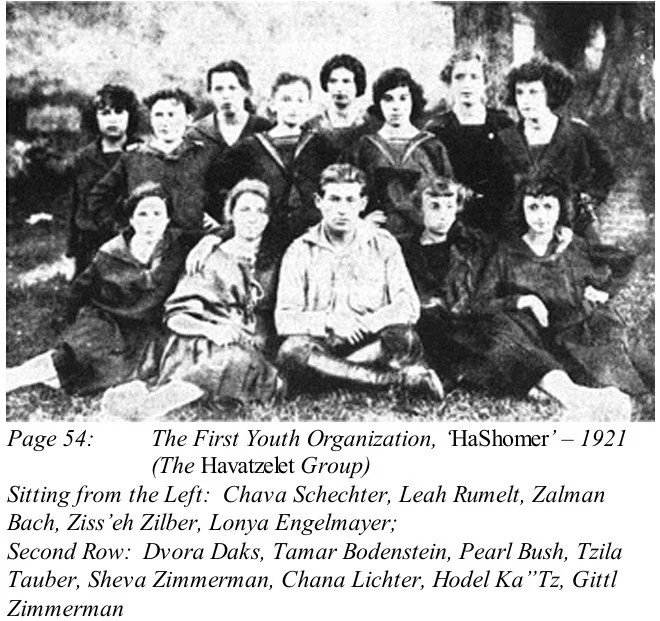
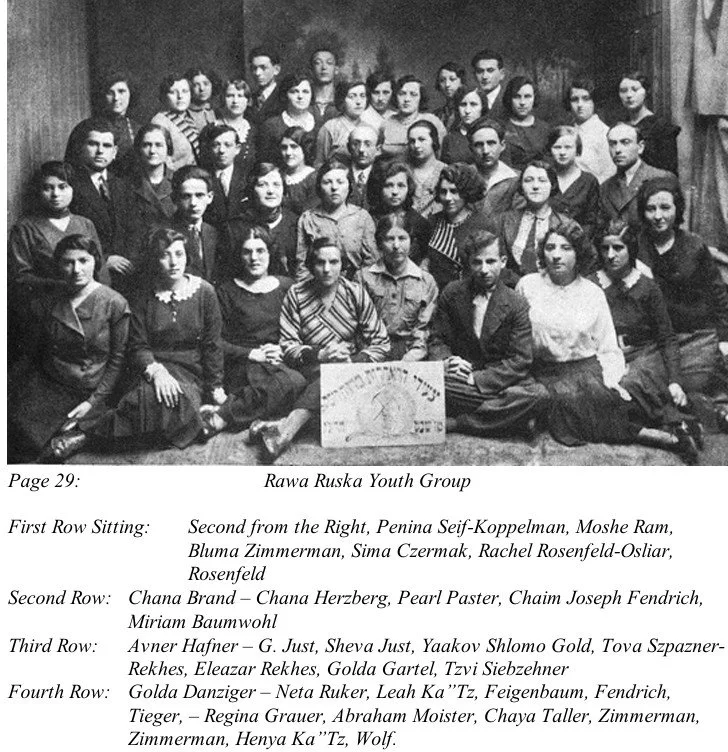
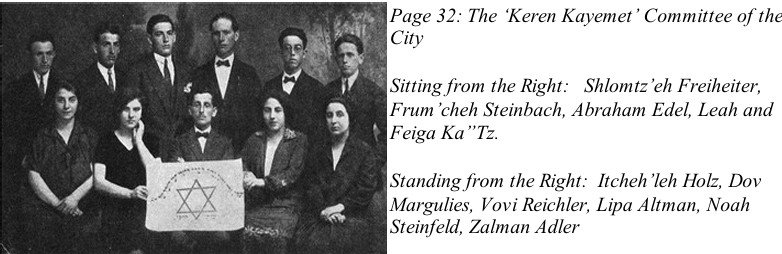
Before the war, Chasidism from Belz dominated the politics of Rawa Ruska. After World War I, there were more and more socialists, Zionists and Aguda party supporters. Zionism became the dominant political party. In 1924, branches of Hitachdut and Mizrachi parties were established. At the end of the war, the Zionists created a branch of youth organization Hashomer. In the first elections after World War I, there were 22 Jews, 20 Poles and 6 Ukrainians in the city council. In the elections in 1933, Jews took 24 places.
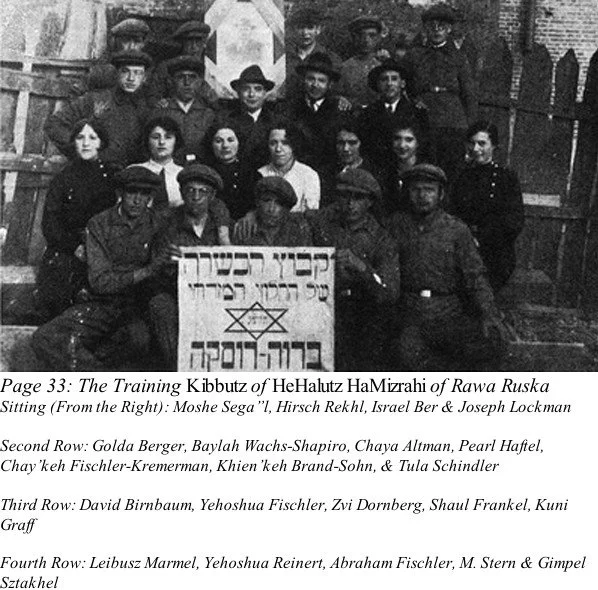
In 1925, Ha-Noar Zionist-Achwa was established, and in 1930 Betar and Akiwa came into being. Gordonia was established in 1925 and became a powerful youth organization. Ha-Szomer Hotzair started to operate in 1937. At the beginning of the 1930s, in the vicinity of Rawa there were training farms of Ha-Noar ha-Zionist organization. All these organizations were opposed to the Chasids from Belz.
In 1931, there were 11,146 inhabitants in Rawa Ruska and 5,658 of them were Jews. The HaTikva drama club (a subsidiary of the Generalist Zionists) was active in town, while other drama clubs were created by Aguas Yisroel, Hitachdut, Revisionist Zionists and the Bund. A Jewish sports union, Hapoel, was established in Rava-Ruska in the early 1930s. A Jewish library, owned by the Bund, included general educational programming.
NEARBY JEWISH COMMUNITIES
In Rawa Ruska County, there were 10,325 Jews in 1931. Nearby Jewish communities existed in Belzec (100 Jews in 1939), Lubycza Królewska (649 Jews in 1921), Maheriv (600 in 1921), Mosty Male (147 Jews in 1939), Niemirów (1,510 Jews in 1931), Potelych (400 Jews in 1931), and Uhniv (2,020 Jews in 1931),
RAWA RUSKA DURING THE HOLOCAUST
On the eve day of German invasion on USSR, there were 7,120 Jewish inhabitants in Rawa Ruska.
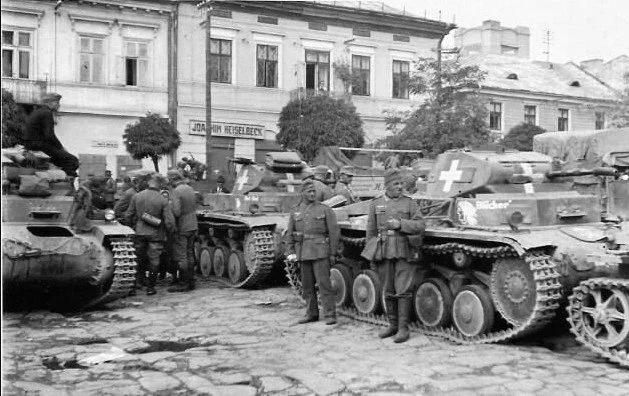
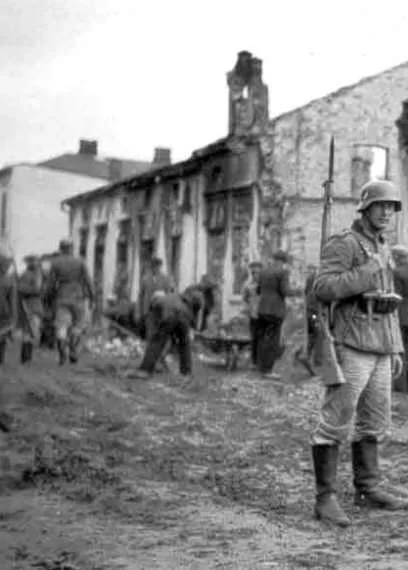
On September 10, 1939, the Germans occupied Rava Ruska. Decrees were created immediately about wearing Jewish stars, limitations on movements, and forced labor. Nazi soldiers also broke into synagogues, and desecrated Torah scrolls. Some Jewish families were imprisoned in March 1940 on economic grounds, and were deported into the interior of the Soviet Union. Many Jewish refugees from Western Poland who found a haven in Rava-Ruska were imprisoned and deported in May and June of 1940.
The Germans captured the town again on June 22, 1941.
In July 1941, Ukrainian nationalists murdered around 100 Jews in the Wolkowic (Wolkowitza) Forest. Under German occupation, the Jews were not allowed to leave the town and were engaged in forced labor. Occupation authorities formed a Judenrat for the town and another one for the Rawa Ruska district. The latter one controlled the ones from nearby towns. Schweitzer, a Jew from Germany, was put at the head, and he was dutiful in obeying the Nazi orders. The Judenrat was ordered to take a census of the Jewish population, to supply compulsory labor, and give the Germans Jewish valuables. By August 1941, the Judenrat had to pay 5,000 rubles to the Nazi authorities. After Schweitzer was killed in 1942, other Judenrat leaders included Vatenberg and Herman Lippel.
On January 17, 1942, the Nazis ordered 250 Jews to a work camp in the area.
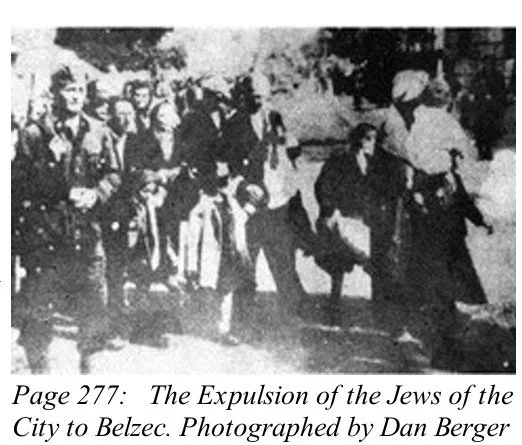
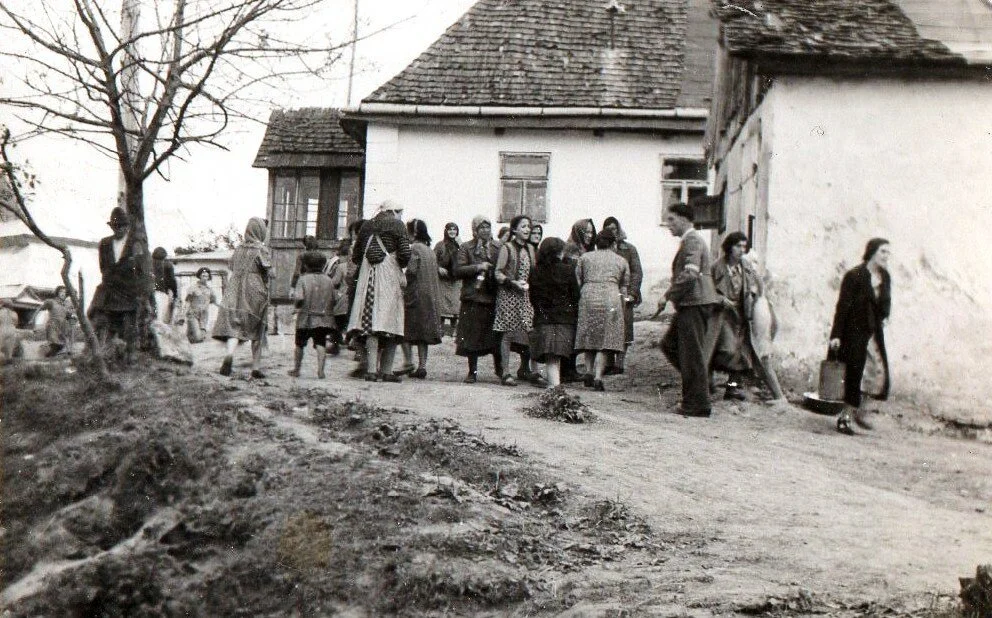
The extermination of Jews started in March of 1942 when around 1,500 Jews were transported to the Belzec Death Camp (22 km away from Rawa Ruska).
In May 1942, Jews from nearby area were brought to Rawa Ruska. The number of Jews in Rawa Ruska increased to about 6,700 people. At the end of July 1942, the second extermination took place. It was carried out by German 133th Police Battalion, Ukrainian Police and local military police. They transported about 1,200 Jews from Rawa Ruska to the death camp in Bełżec. Jews from nearby locations Magierow, Niemirow and Uhnow were also on this transport.
In August 1942, a ghetto was created. In September and October, the Germans resettled Jews from Lubycza Królewska, Magierow, Niemirow, Potylicz and Uhnow into the ghetto. Overall, there were around 8,000 people in Rawa's ghetto at this point. Overpopulation and poor conditions caused disease and death.
Between December 7-11, 1942, the liquidation of ghetto took place: It was carried out by Security Service from Sokal, the 324th Police Regiment, local German military police and Ukrainian support police. Around 250 Jews were able to hide in the vicinity. Of the ghetto inhabitants, 2,500 Jews were transported to the Bełżec Death Camp, 250 Jews were allowed to live to sort the belongings of murder victims, and 5,000 Jews were murdered by shooting and buried them in open ditches that had been prepared for them in the Shidietsky Forest.
On 1 May 1942, some prisoners of liquidated labour camp in Mosty Wielkie were resettled to Rawa Ruska. In June 1943, the labour camp in Rawa Ruska (located near the Rata River) was liquidated. From 8th until 10th of June 1943, some 1,500 remaining Jews were executed in the forest near the village of Borowe.
In addition to the Police Battalion 133, other S.S. men in Rawa Ruska included Josef Grzimek (born 11.10.1905, executed 1950), Johann Jandl (10.4.1880 - 4.15.1960) and Hans Walter Zinser. Other known criminals included Wolodymic Osidach (Ukrainian police in Rawa Ruska) and Polish collaborator Jaroslaw Tesarowycz (aka Miroslav Stasiu).
Rawa Ruska was liberated by the Soviets on July 20, 1944.
WHAT REMAINS
Jewish life in Rava-Ruska was never reestablished after the war.
The new Jewish cemetery in Rawa Ruska is located in the western part of the town, north of the road leading to the village of Borowe. The location of the cemetery is marked on a map published in 1935 by the Military Geographical Institute. During World War II, it destroyed and victims of the Holocaust were buried within its grounds. To this day, at least several dozen matzevot remain preserved at the cemetery, piled in heaps. The cemetery plot is unfenced and neglected.
The Old Jewish cemetery territory is located on the site of the city park on the corner of Yaroslava Mudrogo Street and Lvivska Street.
——————————————————————————
[Project MUSE: Rawa Ruska] [Rawa Ruska Old Jewish Cemetery]
[Yizkor Book] [Geni.com: Jewish Families of Rawa Ruska]
[Rawa Ruska Ghetto]
——————————————————————————
CONTACTS
U.S.: genealogykid20@aol.com
Return to Ukraine Index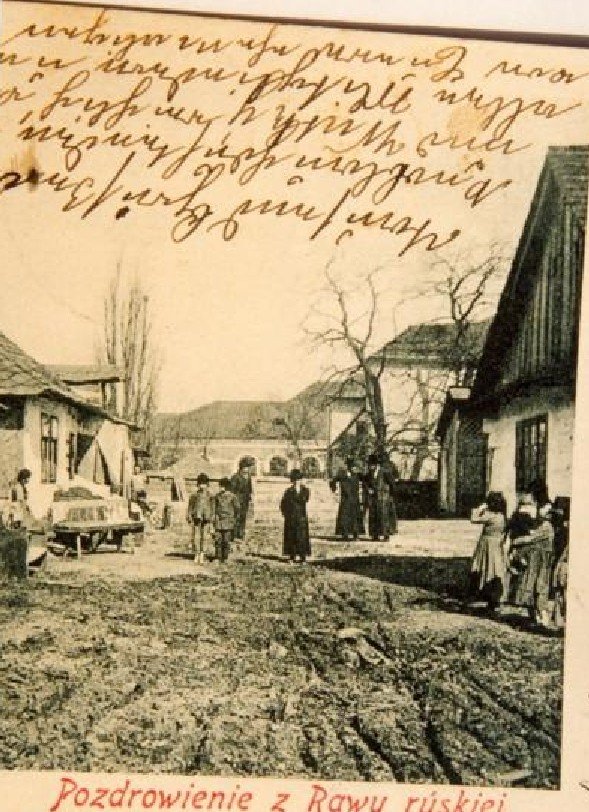
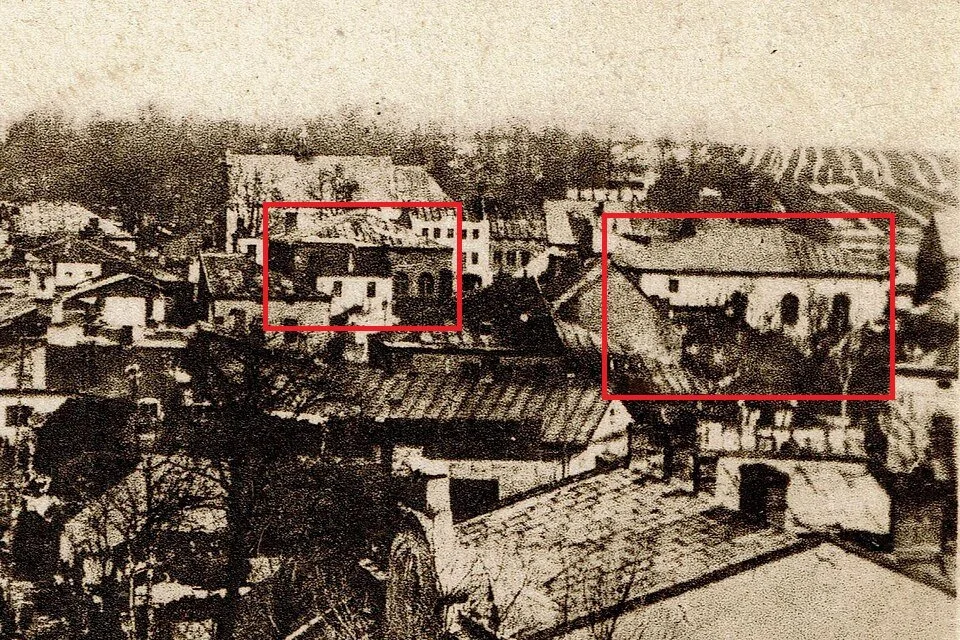
Above: View of Rawa Ruska, including the Aizener synagogue “kloyzs”, in red. On the right side, in red, is the Great Synagogue of Rawa Ruska. Both structures were destroyed during the Holocaust.
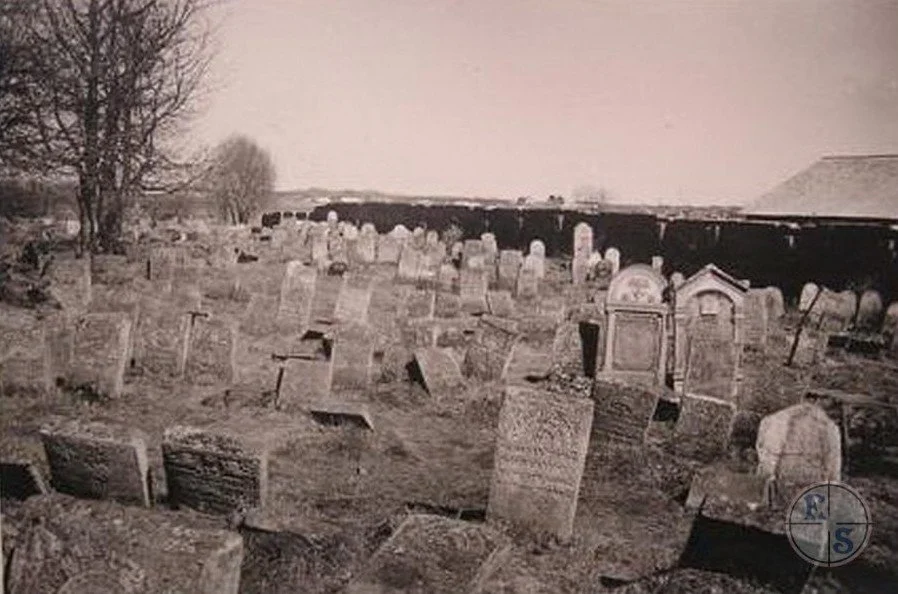
Rawa Ruska Jewish cemetery in 1916.
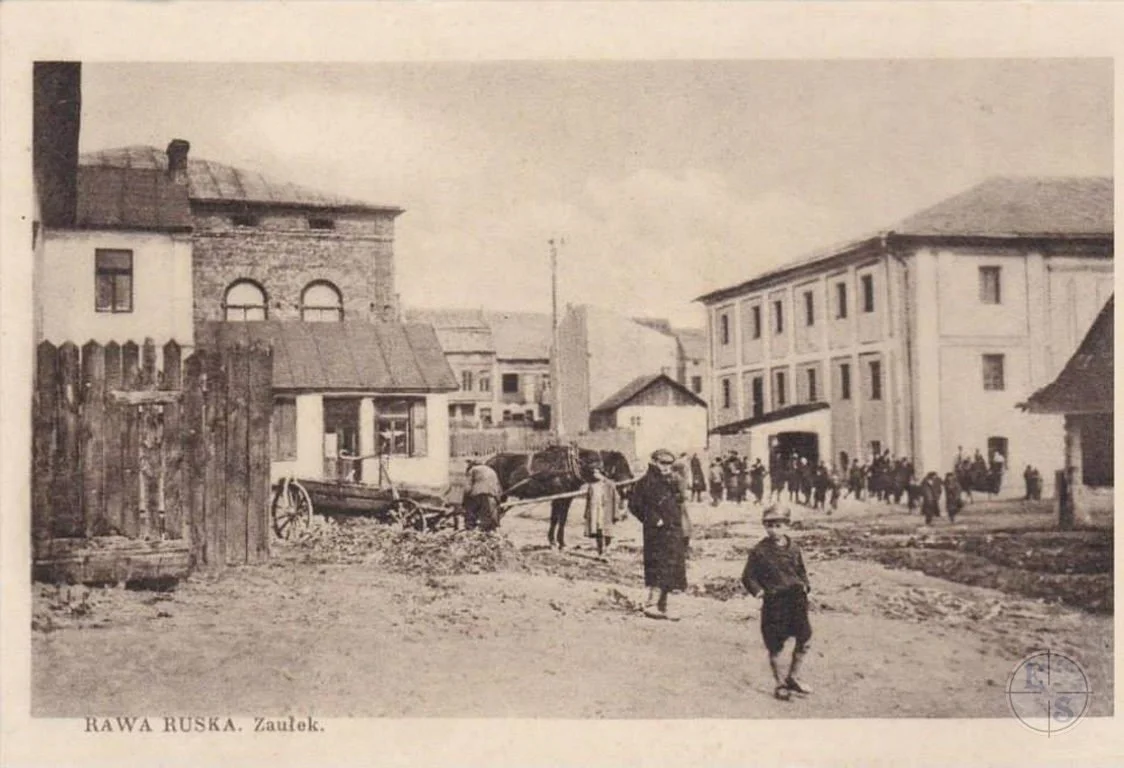
Left side: Synagogue created by Aizener, called “Aizener kloyzs”; right side: Great synagogue. Photo from 1930 in Rawa Ruska.