Remember Jewish Dubienka
HISTORY OF THE JEWISH COMMUNITY: DUBIENKA
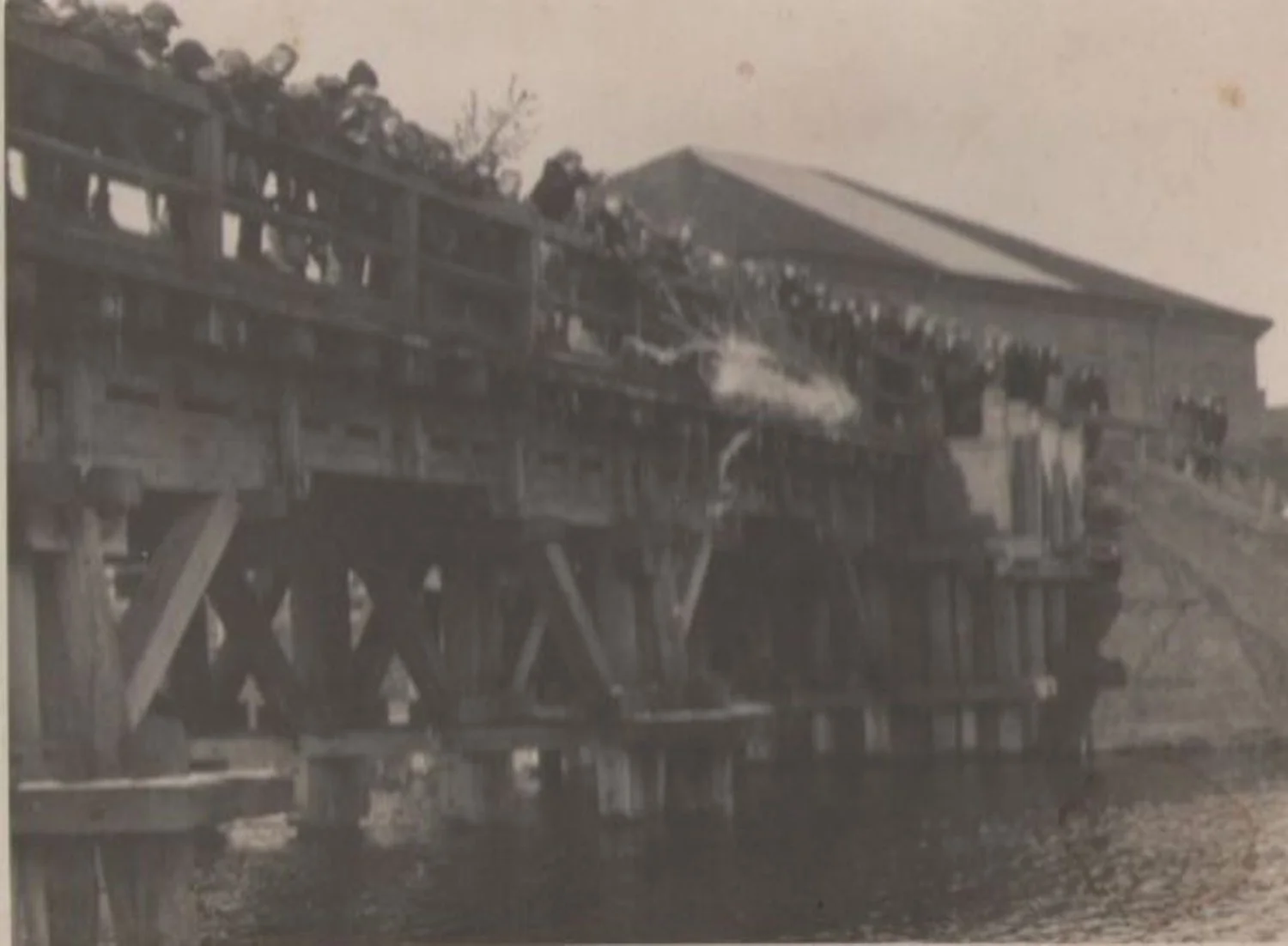
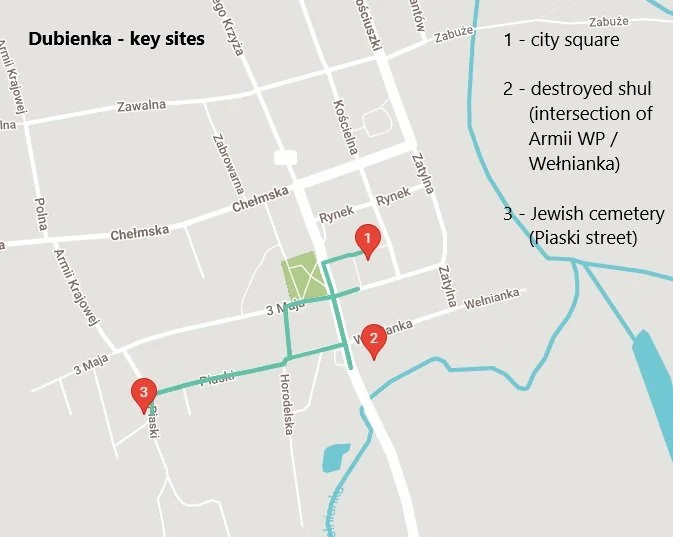
The local Jewish community received the privilege to build the first synagogue in Dubienka from King Sigismund III. However, no documentation has survived on the basis of which it would be possible to reconstruct the history and appearance of it. Before 1939, the synagogue was located at the south-eastern corner of today's I Armii Wojska Polskiego Street (formerly Hrubieszowska Street) and Wełnianka Street (previously called Okopińsko-Holendrowska or Wólczyńska Street). The synagogue in Dubienka was destroyed by the Germans in 1942
Before World War II, two of the three houses of prayer belonging to the Jewish Community in Dubienka were located on Horodelska Street (once called Bożniczna Street, then also Moniuszki Street). All three houses belonged to the Jewish community. The daily attendance was estimated at a total of “up to 140 people”. One of the houses was founded in 1893, the date of foundation of the other two remains unknown.
Before World War II, a mikveh operated in Dubienka at Wełnianka Street. There is a probability that it was located in the western part of the street, in the vicinity of the synagogue. According to the list of synagogues and houses of prayer from 1922, the average daily attendance at the baths was up to 20 people.
During the interwar period, a ritual slaughterhouse operated in Dubienka. It is known that in 1930, the slaughterers paid by the Jewish Community were M. Wowczyk and A. Goldsztejn. There is no information about the facility’s exact location within the settlement.
JEWISH COMMUNITIES NEAR DUBIENKA
There is some information about Jewish communities near Dubienka, as follows:
- Bialopole: Jews lived in Bialopole before the Holocaust, but it is unclear how many. It was probably under 150. Jews were confined to the ghetto beginning in October of 1942. According to the Dubienka yizkor book, which contains testimony from one Jonah Cukierman, “One day the Nazis demanded that the Dubienka Judenrat send twenty strong young men to work in the brickworks at Bialopole, which produced brick cobblestones. This cygelnia (brick factory) belonged to the well-known Goldbarten family. The Judenrat sent twenty young men who worked there for a few months. Once their work was done, the Nazis placed them in an empty shed where Jewish workers had lived, crammed in thirty more young men from a different town, closed the doors and window, splashed kerosene on the walls, and set fire to the structure. Only ashes were left.”
In April 1942, Jews in Hrubieszow powiat were forced to relocate to five 'collection points': Uchanie, Grabowiec, Dubienka, Belz, and Hrubieszow. The order included 200 villages in the powiat, among them Kopylow, Koblo, Moniatycze, Wojalowice, Bialopole, and Czortowice. Per the Hrubieszow yizkor book: Before the last Aktion by the Nazis of October 1942, the small number of Jews remaining in the villages of Uchanie, Białopole, Maladyatich, Letsubrovich, and other villages were taken to Hrubieszow. The vast majority of the remaining Jews of Hrubieszow were subsequently murdered at the Sobibor gas chambers.
- Busno: During the Chelm-Hrubieszow Death March, 150 Jews from Chełm killed were murdered in a killing field in Busno in December of 1939. The Lasting Memory Foundation memorialized this location in 2011.
- Dorohusk: Dorohusk lies on the banks of the Bug River about 20 km (12 miles) from Skryhiczyn. Dorohusk was a lively town with a rich Jewish life. Dorohusk had 1,075 inhabitants at the start of WWII, including 430 Jews. Jews settled in Dorohusk in the 1700s. In 1769, Berek son of Josef, a resident of Dorohusk, received the right to a six-year lease of the inn and mill. He was also involved in the construction of river ships (komięg).During the interwar period, in 1929, the following people ran grocery stores in Dorohusk: E. Rosenberg, M. Rosenberg, M. Wajngarten, C. Werber and L. Zygielman. Moreover, B. Alter and Sz. Zylbersztein owned general stores. In addition, Abram Alter and Ch. Hercman had teashops. At Zwyciestwa Street, there was a butcher house also owned by Abram Alter. Dorohusk's Jews largely lived at the northern end of Nowa Wieś Street. Jews in town were involved in the cattle and timber trade, small craft workshops and stores. An oil mill owned by a Jewish community member operated at the intersection of Zwycięstwa and Ogrodowa Streets. Mordko Rozenberg's private prayer house, founded in 1918, also operated in Dorohusk. There was also a kosher slaughterhouse. During the Holocaust, the Nazis established a labor camp in Dorohusk. The Dorohusk Labor Camp was established in the spring of 1940 and operated in two wooden barracks that remained from a former Austrian military hospital. Around 300 Jews, mostly from Warsaw, were held there and guarded by six members of the Selbstchutz. They performed drainage works on marshy meadows located 2 km. from the camp. The camp ceased to exist before 1943 and it is unknown what happened to its prisoners, although it is very likely that they were murdered at the Sobibor Death Camp. The Dorohucza Concentration Camp was located north and west of Chelm and is a different location than Dorohusk. During the German occupation, all Jewish inhabitants of this village were murdered.
- Siedliszcze: Jews settled in Siedliszcze in the 1700s. In the 1800s, there was a synagogue, elementary school, and postal office in town. There was a tool factory, three tanneries, an oil mill, a distillery, two water mills, several inns or taverns and a sparkling water factory in town. In the 1930s, there were several motor mills, three water mills, nine windmills, and a distillery. In 1867, a synagogue was constructed. In 1870, there was also three beit hamidrashim, a mikveh, and a Jewish hospital. The Jewish community had five cheders as well as a Talmud Torah school. Communities that were a part of the Siedlieszce Jewish community included Cycow, Liszno, Kanie and Wolka Kanska. Mizrachi and Agudas Israel were active in the community, and a Beit Yaakov school for girls operated in town. A Linas Ha-Cedek charity organization was active. Youth participated in Hashomer Ha'tzair and Beitar. Some of the notable Jews in the town included Hersh Hochman, who operated a motor mill; Mordko Holzenbaum, who operated an oil mill; Abram Michalik, who operated a water mill in Doorhucza; Abram Zajdenberg, who operated a water mill in Janowica; and Israel Rosen, who operated a water mill in Brzeziny.
The Jewish population in 1939 was 1,360, per Yad Vashem. The ghetto in Siedliszcze was established on June 1, 1940. The entire Jewish population of the town of about 2,500 people was confined there. Jews from Krakow and Lublin were also sent to the Siedliszcze ghetto. Additionally, a large group of Jews from Bohemia in Germany were sent to the ghetto. The ghetto’s inhabitants worked mainly on land reclamation and to regulate the Mogielanka river for the Wasserwirtschaft Inspektion [German Water Management Board]. In April 1942, nearly 3,000 Jews from Czechoslovakia were brought to Siedliszcze. Already in May, they began to be transported to the extermination camp at Sobibor. A group of 800 Jewish prisoners were sent to the Staw-Nowosiolki Labor Camp. Separate from these aktions, in 1943, 120 people were murdered in Siedliszcze. Among the victims were local and Czech Jews as well as Roma and local Polish farmers. The crime was committed by the military policemen from Cyców. The remains of the victims were buried in a cemetery and in a field. From subsequent documents, we learn that the bodies were buried in the Roman Catholic and Jewish cemeteries.
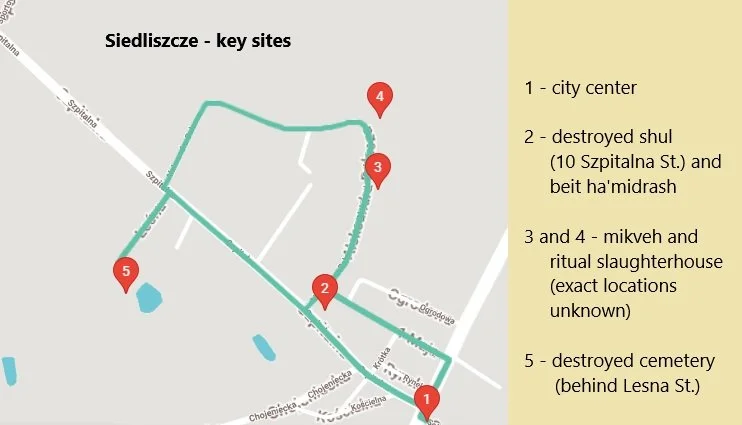
Among the Nazi unit in Cycow responsible for some of these murders were the following individuals: unknown Benke, Otto Brandenburg, unknown Gulhorn, unknown Hajzyk, Otto Kanwischer, Paul Kindler, unknown Kirchner or Kirschner, Erwin Kramer, Adolf Loeve (Löwe), unknown Lorenc, Gottfried Schmidt, unknown Wanut and unknown Winkowski. The synagogue was located at 10 Szpitalna Street. The synagogue had two floors that included an Aron Hakodesh, a staircase, a men's hall with a centrally located bimah. The synagogue, ritual slaughterhouse and mikveh all had to be rebuilt around 1927 due a to fire. The synagogue was destroyed during the Holocaust. The Jewish cemetery is located on Szpitalna Street. It was destroyed during the Holocaust.
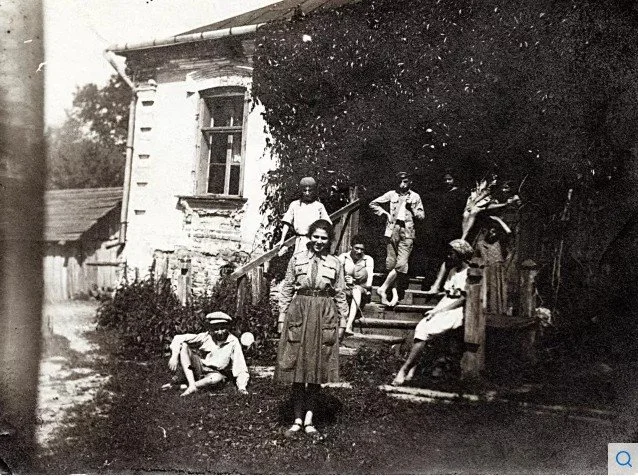
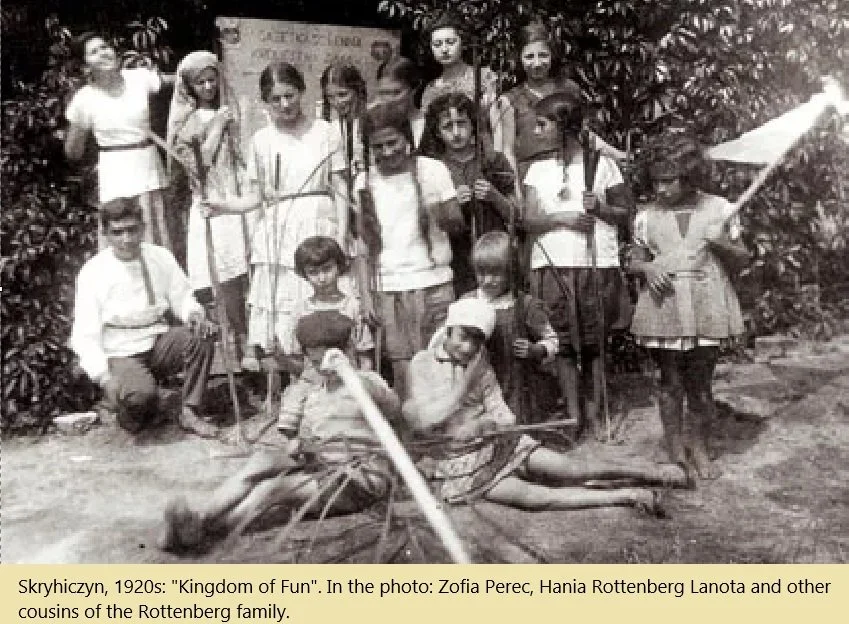
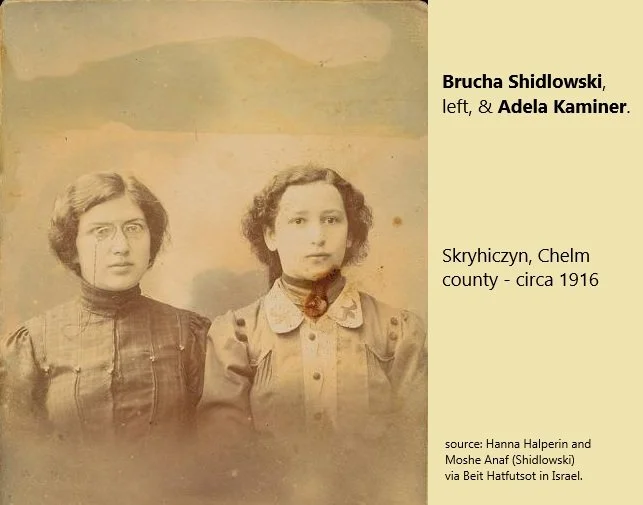
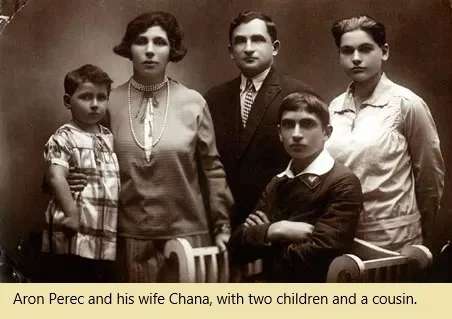
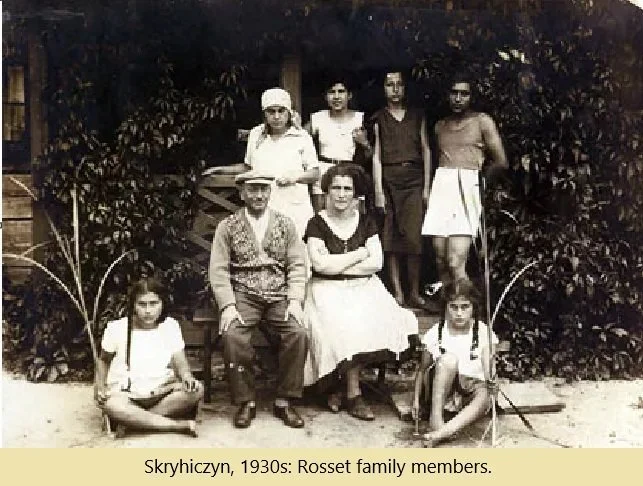
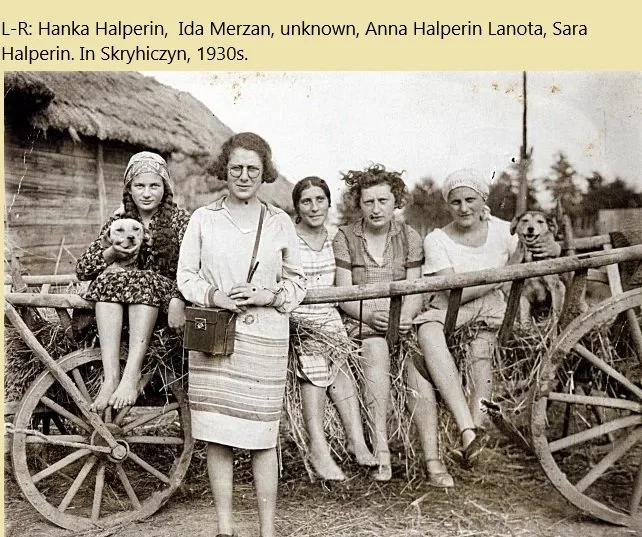
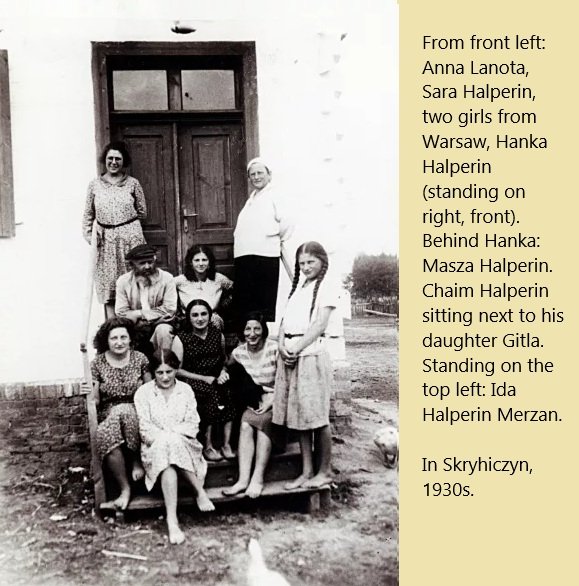
- Skryhiczyn: The pre-war Jewish population of Skryhiczyn included around 300 Jews, mostly from the family Rotenberg, which was a Hasidic and Zionist farming family. Other related families included Halperin, Horowicz, Kaminer and Szydłowski. In 1871, Mordko Kalman Rottenberg had purchased the land. Despite economic struggles and rising anti-semitic sentiment in the 1930s in rural eastern Poland, the community remained tightly knit, with children related to the Rotenbergs often spending summers there. The children were taught in both Russian and Hebrew. In personal narratives that remain about the village, it was described as “The Kingdom of Fun.” From one source: “Skryhiczyn included a special Jewish community, whose members were pious, scholarly, and descendants of Hasidic leaders. They possessed all the best features: religious study, work, Zionism, and doing good deeds. Most Polish Jews were not farmers since Polish law prohibited selling land to Jews. But the brothers Shmuel and Chayim Rottenburg were able to purchase an entire estate in Skryhiczyn. Life in the town was unique, and for many years nearly idyllic.”
According to Holocaust survivor Zusanna Rosset Mensz: “There was Skryhiczyn-Dwor [manor] and Skryhiczyn-Folwark [farm], 3 km. apart. It was owned by one family, the Rottenbergs. We had our tenant farmers, the Blanders, living in the house whole year round. It was a couple with three children who were very religious Jews. Mr. Blander had his own horses and cattle and he was a very good farmer.” And, according to Ida Merzan, “There was a short time in Tsarist Russia when Jews were allowed to buy land, and then my grandfather's mother, Ita Rottenberg, bought Skryhiczyn from a German. Skryhiczyn was later the property of my grandfather, Szmuel Rottenberg, and his brother Chaim. Grandfather had one manor and his brother another. Shmuel and Ida Rottenberg's children were Zlata, Hena, Fajga, Chaja, Masza, Natan, Henoch, Josel, Mordechaj, and Szloma. After Grandfather's death the estate was divided up into farms for each of the children, each one with 60 hectares of land plus so many hectares of woodland and meadow. Each of the children built themselves a separate house.”
According to eyewitness testimony from Holocaust survivors who visited Skryhiczyn during summers: “We used to go swimming in the Bug river, three kilometers from the Farm, and visit the uncles at the Manor on our way back, they would give us treats and we would go back to the Farm. We often worked in the fields, helping harvesting or threshing. The harvest was still done with scythes. We tied the sheaves and carried them over to the barn. Then we tossed the sheaves into the threshing machine.” Additionally: “Jews in Skryhiczyn spoke Hebrew, Yiddish, and Polish, with no Jewish accent but rather the rural one like everywhere in the Lublin region.”
In November of 1941, a group of Jews from Skryhiczyn were relocated to the Hrubieszow Ghetto. At the end of May, or on June 1, 1942, up to 40 Jews from Skryhiczyn were rounded up by German police and transferred to Dubienka. From both Hrubieszow and Dubienka, the Jews of Skryhiczyn were deported to the Sobibor Death Camp.
- Wola Uhruska: See Remember Jewish Wola Uhruska for information on Wola Uhruska and nearby Jewish communities of Kosyn, Piaski (Chelm county, not the Piaski near Lublin), Uhrusk, Wolczyny, and Zbereże.
- Zmudz: Żmudź was a predominantly agricultural village before the Second World War, with land primarily owned by Ukrainians. Only 12 Polish and 4 Jewish families lived in the village. The Jewish residents were mainly shopkeepers, selling food, various handicrafts, and sewing tools, and their children attended the local Polish school.
Sixty-six individuals were gathered at the fire station, next to the municipal building, according to eyewitness testimony from Yahad-in-Unum. German soldiers arrived from other areas in several cars. The Jews, who had their belongings with them, had also come from elsewhere. There were men, women, and children among them. A pit was dug about 200 meters from the fire station. They were placed in front of it and shot in the back. Then the pit was covered with earth and lime.” This event took place in fall of 1942. After dividing them into two groups, they were led to a pit dug by locals near the fire station, shot in the back, and buried in a pit covered with earth and lime. Polish archives additionally report that, alongside the 53 Jewish victims, 13 Poles were also shot and buried in nearby graves, some of which were exhumed post-war.
Żmudź was also the site of a water labor camp established in 1940 as part of 16 melioration camps across the Chełm district. During 1940 and 1941, several thousand Jewish workers were deported from Warsaw to the Sobibór railway station and then marched to one of these camps, including Żmudź. In March 1941, the S.S. established in a workshop for the use of the Air Force and requested 300 Jewish slave workers from the Judenrat in Izbica. A list of known Jewish refugees in the village of Zmudz is listed here. Slave laborers were probably sent to Zmudz from locations other than Izbica as well. Conditions in the Żmudź camp were extremely harsh; witnesses described it as a large, barbed-wire-enclosed camp, guarded by Germans, with dugouts instead of barracks for prisoner housing. Weaker prisoners were regularly transported by trolley from Żmudź to the Sobibor death camp.
In addition, from July 1941 to October 1943, a POW camp known as Stalag 319 D, subordinate to Stalag 319 of Chełm, operated at the site of the local distillery in Żmudź. Around 450 prisoners died in this camp and were buried in the adjacent POW cemetery.
DUBIENKA DURING THE HOLOCAUST
From the very beginning Jews were subjected to humiliation, force labor and robberies. A Jewish council was established. Members included: Moshe Helfman (President), Shepsl Bernshteyn, Jojna Cukierman, Itshe Dantsiger, Beynish Krempel, Chaim Lemberger, Abram Mandel, Aharon Mastboym, Yona Piness, Yitzchak Segel, Ayzik Sobel and Velvele Winik.
On December 1, 1939, Germans transported young men to Hrubieszów, and from there to walk to Soviet border. During this death march, a lot of Jews were shot and drowned in the Bug River. In the spring of 1940, hundreds of Jews aged 17 and above were sent to labor camps around Bełzec.
In May 1942, the German authorities reported that there were 2,907 Jews in Dubienka, who were brought from different places. On May 22, 1942 an Aktion against the Jews took place during which a number of Jews were shot at the Jewish cemetery. On June 2, 1942, the Germans undertook a deportation Aktion to Sobibór extermination camp. After this deportation Aktion, only about 200 Jewish craftmen remained. They were deported to Hrubieszów ghetto and killed afterwards, in the middle of August, 1942.
Of a pre-war Jewish population of 2,500 Jews, only 15 survived the duration of the war.
In fall 1942, as a village administrator of Tursko, Wiktor Swaczyna, seized a 17-year-old Jew, tied his hands and led him to the German gendarmes who shot him.
WHAT REMAINS
Before 1939, the synagogue was located at the south-eastern corner of today's I Armii Wojska Polskiego Street (formerly Hrubieszowska Street) and Wełnianka Street (previously called Okopińsko-Holendrowska or Wólczyńska Street). The synagogue in Dubienka was destroyed by the Germans in 1942 and no material traces of it remain.
The Jewish cemetery in Dubienka was established at the end of the 16th century, perhaps around 1570. It is situated in the western part of the village, in the place where Piaski street forks off. During World War II, massive executions took place in this cemetery. None of the tombstones survived in the cemetery area. Nowadays, detached houses are built on the part of the cemetery. Further development wreaked further havoc on it after 1945. A 1933 WIG map indicates that its original area was much larger, laid out on a rectangular plan. Currently, except for a small section, the cemetery has been transformed and built over; only a fragment of the historic area remains fenced.
Of the 2,500 Jews in pre-war Dubienka, around 15 survived the Holocaust.
Zachor - We Remember. Please review the site content below.
------------------------------------------------------------------------
[Dubienka - Project Muse] [Dubienka - Virtual Sztetl]
[Dubienka Yizkor Book in English]
[Skryhiczyn, Dorohusk Yizkor Book in English]
[Yahad-in-Unum: Map of Execution sites in Dubienka]
------------------------------------------------------------------------
Dubienka LINKS
General:
- List of Refugees in Zmudz County 9/7/1941 - JDC
- List of the Needy in Żmudź County (near Chelm) 9/7/1941 - JDC
- Saving 42 Jews of the Żmudź area - JHI
Genealogy:
Jewish Records Indexing Poland - Sawin
Jewish Vital Records in the Polish State Archives
Remember Your Family:
Central Judaica Database - Museum of History of Polish Jews
Grandchildren of Holocaust Survivors on Facebook
Guide to the YIVO Archives
Holocaust News/Events from Generations of the Shoah Int'l
Holocaust Survivors and Victims Database
JewishGen Family Finder
JewishGen Holocaust Database
JRI-Poland: Search for Your Family
Museum of History of Polish Jews Introduction
Yad Vashem: Search for Your Family
Yad Vashem: Submit Names of Your Family Members
Yad Vashem Requests Photos of Shoah Survivors and Families
CONTACTS
U.S.: LublinJewish@gmail.com
Return to Lublin Index
REMEMBER JEWISH DUBIENKA
Holocaust Survivors from Dubienka:
- Shlomo Bubis
- Jona Cukierman
- Israel Gajer
- Ascher Krausz
- Pnina Bir Nes
- Celia Nuwendstern Ores
- Estera Rotenberg Shlomovitz
- Bella Schwartz Spiegel
- Sam Szor
- Rachel Goldfarb Sztairman
List of Refugees in Żmudź County, Poland (1941)
Srul Goldberg from Żmudź
Brucha Hohler from Żmudź
Motel Mont from Żmudź
Azriel Nirenberg from Żmudź
Masia Szafer from Żmudź
Fajga Sztajnworcel from Żmudź
Wolf Sztajnworcel from Żmudź
Chawa Szydlowicz from Żmudź
Mordka Frajman from Syczow
Ezriel Hendel from Syczow
Ruchla Horowicz from Syczow
Lejba Rozenbaum from Sychow
Munysz Szach from Syczow
Abram Zylbersztajn from Syczow
Chaja Pech from Bielin
Hersz Bongart from Ksawerow?
Mendel Blecher from Lipinki
Josko Mendzelewicz from Roztoka
Jankiel Werberszpil from Rudno
Doba Cukier from Wolkowiany
Ita Krysztal from Leszczany
Ita Apelcwajg from Leszczany
Hersz Zylberman from Laszczanach
Szymon Alt from Wolka Leszczanska
Moszko Cymerman from Wolka Leszczanska
Lejzor Gierszenbaum from Koczow
Icek Sygal from Koczow
Icek Kierszenbaum from Koczow
source: JDC Archives
REMEMBER JEWISH SKRYHICZYN
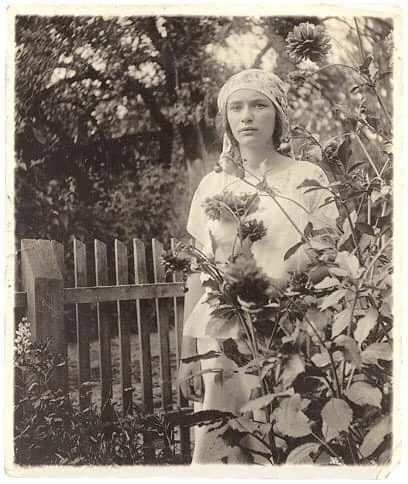
Above: Ita Prywes, the daughter of Chaim Rotenberg.