Remember Jewish Kotzk (Kock)
Pronunciation: Kotsk
HISTORY OF THE JEWISH COMMUNITY
The Jewish community including a kahal were established in the early 1600s. In 1787, the Jewish population in town was 850, representing almost 50% of the community. By 1820, there were 549 Jews in the community. By 1895, the population of Jews had boomed and there were 3,037 in town. By 1937, the Jewish population in Kotzk was 2,213.
Jews leased a timber yard situated along the Wieprz River, which served as a waterway for floating timber downstream to Warsaw and Gdańsk. In 1855, the leaseholder of the yard was Moszek Michelsohn. By the late 19th century, Jews constituted the majority of Kock’s population. In 1895, out of the town’s 4,677 inhabitants, 3,037 were of the Jewish faith (64%). The Jews of Kock were primarily engaged in trade and artisanal crafts. According to data from 1828, 37 Jews paid fees for grazing livestock. Some of the early craftsmen mentioned in the village, in the 1800s, included Henryk Weiseman (cooper); Abram Gedhowicz, Ick Haskiel, Mordka Jekowicz, Icko Mortkowicz, Szymche Moszkowicz, Ick Rozumny (tailors), Jankiel Farberman (cloth dyer), Józef Cygler (brass maker), Johan Ryfer (brewer), Wolw Fraiman (butcher), Abram Burstyn (turner) and Fajwel Bursztyn (turner). Traders listed in early soruces include Moszek Abramowicz, Feivel Dawidowicz, Icek Herszkowicz and Berek Lejbowicz. Merchant stalls were owned by Dawid Broneberg, Szloma Zelmonowicz, Szmul Kiwowicz and Fetka Moszkowicz. In the mid-1800s, the Christian population in Kotsk was engaged in agriculture while there were 136 craftsmen in town. The community, at that time, had two oil mills, a soap and vinegar factory and two water mills in Kotsk.
The Elementary School Society in Kock was established at the beginning of the 1800s. In the interwar period, it brought together not only Jews (80 people), but also Christians (260 people). The school, which operated under the auspices of the Society, was attended by both Jewish and Catholic children. The yeshiva operated starting in 1913. During the interwar period, there were several cheders in Kock, a Talmud-Torah school financed by the Jewish religious community, as well as a yeshiva. Among the teachers at religious schools in Kotzk were Beniamin Elemonowicz, Szaja Bakalarz and Szmul Szulimowicz. There was also a religious school for girls in the city, Bet Yaakov, affiliated with Aguda. At the beginning of the 1930s, it was attended by about 40 students. In addition to Jewish schools, children were obliged to attend a public state school. Teachers of Jewish origin, including Jachweta Rychtenberg, taught in this type of state school. After the end of lessons in a Polish school, many Jewish children subsequently would also attend a Jewish religious school.
The Orthodox organization “Agudat Israel” had its branch in Kock in the interwar period. It was one of the largest Jewish organizations in the town with 120 members. Aguda ran a girls’ school. The organization B’nei Zion Union was established in Kock in 1919. It had 120 members. In the interwar period, a branch of the Zionist Organization of Religious-Orthodox Jews “Mizrachi” operated in Kock. It had about 30 members. The Jewish scout organization Ha’shomer Hatzair in Kock was founded on December 26, 1929. In 1933, it had 67 members. A branch of the Association of the Zionist Organization in Poland operated in Kock from October 4, 1929 to 1934. It had 25 members. The organization ran a library with a reading room. The Zionist Labor Party “Hitachdut” branch in Kock operated in the years 1925–1927. There is no data about its members. Youth groups were also active in the town, notably the Zionist scouting organization HaShomer HaTzair, founded in 1929, and the Revisionist-Zionist group Brit Trumpeldor. Additionally, from 1921 onwards, clandestine cells of the Communist Party of Poland operated within the town and exerted considerable influence within the town's socio-cultural organizations.
In 1919, the Town Council included eleven Jewish councilors: Gerszon Bronsztejn, Abram Czarna, Szoel Handelsman, Jankiel Herc, Icek Krajcman, Lejzor Siemiatycki, Mojżesz Wajnberg, Majer Warum, Abram Zakalik, Chaim Szyja Zalcman, and Jojna Zygielman. Official representatives of the Jewish community in 1930 included: Rabbi Josef Morgensztern, H. Zalcberg (assistant rabbi), Abram Szarfarc (ritual slaughterer), Aron Jakubowicz (position unclear), D. Lak (kashrut supervisor), H. Szef (scribe/teacher) and C. Marchewka (secretary). In the 1920s, most of the shops (and there were about 100 of them) belonged to owners of Jewish origin, as well as all oil mills, dyeing plants, slaughterhouses and bakeries. Also, the timber industry plants and grain trading enterprises were in the hands of the local Jewish community. In 1920, the Cooperative of Jewish Craftsmen began to operate in Kock. The details of the organization's activities are unknown. In 1924, all of Kock’s bakeries, butcher stalls, oil presses, and dye works were owned by Jews. Conversely, of the town’s 10 meat shops, only one was under Jewish ownership.
Among the economic associations operating in Kock, it is worth mentioning the Jewish Cooperative Merchant Bank. It was established in 1926. In 1919, the Credit Cooperative of Jews in Kock was established. It was an economic association, probably having the character of a mutual loan fund. In 1922, the Jewish Credit Cooperative was established in Kock. Further details of its functioning are unknown. The development of Jewish entrepreneurship in Kock, which was already taking the form of small industry, was reflected in the formation of trade unions in the interwar period, including the Central Association of Jewish Artisans, Union of Leather Industry Workers, Trade Union of Garment Industry Workers, and others.
The Association for the Care of Jewish Children and Orphans in Kock was founded in 1924. It had 110 members. There were two private houses of prayer in Kock, operated by Dawid Morgensztern and Berek Lewszuk. The location of these houses is unknown. The daily attendance was estimated at 40 people. Both were built in the 1800s. There was also a Jewish ritual bath (mikvah) in Kock and its exact location is unknown.
In 1930s, a branch of the Jewish organization League of Proletarian Culture, commonly known as the Kultur-League, operated in Kock. In 1938, it had over 70 members. There was a board of directors consisting of: president Szmul Chaskiel Szczeciniarz (tailor), Ryfka Knopfer (seamstress) and Lipa Heryng (tailor). The Jewish community also hosted various Jewish cultural and educational institutions, including the Jewish Cultural Association, the Jewish Amateur Arts Circle, and the I. L. Peretz Jewish Library which featured lectures and book fairs.
NEARBY JEWISH COMMUNITIES
The Jewish residents of the villages of Czarna (unknown Jewish population), Górka (unknown Jewish population), Lysobyki (unknown Jewish population), Motwica (unknown Jewish population), Serock near Firlej (10 Jews), Serokomla (250 Jews in 1939), Stoczek (unknown Jewish population), Sobolew near Firlej (15 Jews), and Tchórzew (unknown Jewish population) were under the jurisdiction of the Kock Kahal (Jewish community council). Additionally, around 2,000 Jews lived in Michow in 1939 and 250 Jews lived in Jeziorzany in 1939. In Firlej, 250 Jews lived there in 1939.
KOTZK DURING THE HOLOCAUST
During the first bombing of Kock, in September of 1939, Rabbi Josef Morgenstern was killing, along with 16 members of his family. Shortly after the German entry into Kock (October 9, 1939), the Jewish population was compelled to wear the Star of David insignia on their clothing.
In 1940, a group of approximately 1,100 Jews from Nasielsk, Serock, and Suwałki was resettled to Kock. By December 1939, a total of 8,000 Jews were present in the town. Jews were also transported to Kock from neighboring towns, including Firlej and Lubartów. Toward the end of 1940, the Germans established a ghetto, which was situated along what was then Żydowska Street. Famine, typhus, and tuberculosis were rampant within it. Additional Jews were transported to the ghetto from other cities, including Nowy Dwór Mazowiecki.
In early 1940, the Germans established a Judenrat headed by Saperstein, a refugee from Poznań. In 1941, a branch of the Jewish Social Self-Help organization was formed, which organized a community soup kitchen. Its membership included: T. Szloma (chairman), I. Korman (deputy), and L. Rubinsztein (member). The ghetto was sealed off in early 1942.
The Nazis carried out their first executions of the Jewish population in January and June 1940. For this purpose, S.S. men from Radzyń Podlaski were selected; they rounded up the Jews in the market square and subsequently killed Abram Wodyński, a shoemaker. Other Jews were beaten, while the beards of the elderly were set on fire. In the afternoon, 62 of the 200 detainees were released. The remainder were forced to march toward Radzyń Podlaski. Those unable to keep up with the pace of the march were killed. Those who did reach Radzyń were transported by rail to Biała Podlaska, and subsequently to Terespol and Rossosz, where they were subjected to forced labor.
In August of 1942, the Judenrat was forced to select 100 families, who were deported to Parczew and subsequently to the Treblinka Extermination Camp. Another deportation, involving 1,700 people, took place in September. During this operation, the Schupo shot and killed 10 individuals. Hundreds of Jews were transported to the ghetto in Łuków on October 8, 1942. The remaining inhabitants of the now-dwindled ghetto, located between Warszawska Street and Aleja Wojska Polskiego, were forced to perform labor involving the cleanup and sorting of Jewish property. The deportations were supervised by the Second Platoon of the German 101st Reserve Police Battalion, stationed in Kock. During this period, under the command of Major Wilhelm Trapp, numerous executions were carried out in which hundreds of people were shot, including in the village of Talczyn.
On November 6, 1942, the liquidation of the Kock ghetto began. The Jewish community was deported to the Treblinka Extermination Camp for surefire deaths. Two hundred people remained behind to work at a labor camp located at a sawmill in Poizdów. The Germans desecrated the Jewish cemetery and demolished buildings belonging to the community.
WHAT REMAINS
Fewer than 30 Jews from Kock survived the Holocaust. Chaja Liss (née Rybarczuk), a Holocaust survivor from Kotsk, returned to town in the mid-1940s and was subsequently killed when attempting to recover her belongings.
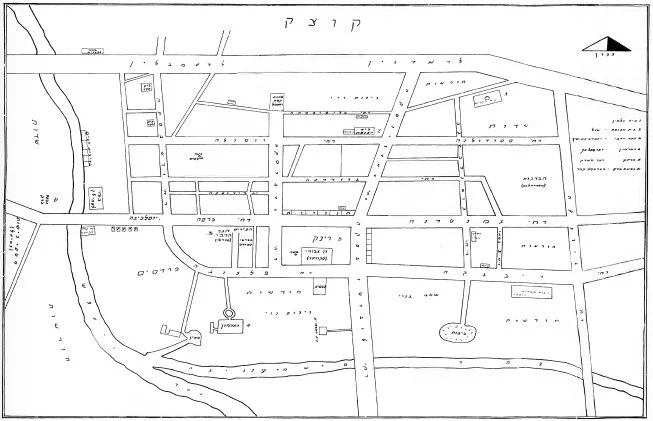
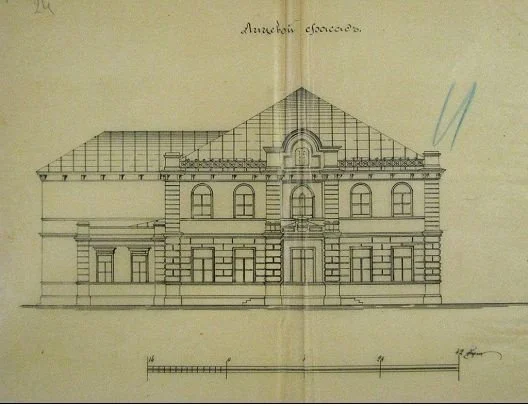
The synagogue in Kock was situated on Radzyńska Street, at a site now located at the intersection of Wojska Polskiego, J. Piłsudskiego, and H. Sawicka Streets. It was a large, 2-story building featuring a Neoclassical style and a richly decorated interior. The synagogue was built in the 1700s. In 1927, during renovations, its walls were re-painted and floors were replaced. Daily attendance at the synagogue was estimated at 300 individuals. In November 1939, the synagogue was burned down by the Germans. No material trace of the structure remains today.
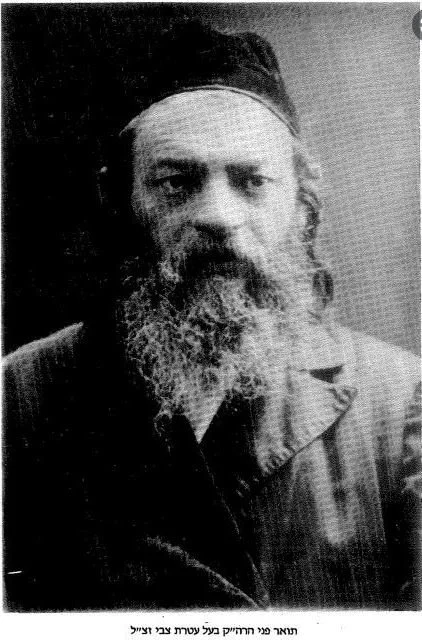
The Jewish cemetery in Kock is located on St. John the Baptist Street (ul. Św. Jana Chrzciciela). Its current boundaries are defined by a modern fence composed of steel sections. The site covers an area of approximately 1.75 hectares. The cemetery was established in the last quarter of the 18th century, during the urban reorganization of the town. It had replaced an earlier Jewish cemetery in Kock, the exact location of which is not known. In 1859, Menachem Mendel Morgenstern, the first Hasidic Rebbe of Kock, was buried there, and an ohel (shrine) was erected over his grave. The cemetery was desecrated by the Nazis. Additionally, executions of Jews were carried out on the premises, with the victims being buried on the spot. In the 1990s, a new fence was constructed, featuring a gate adorned with decorative metalwork elements. Some matzevot still remain.
Berek Joselewicz, a famous Colonel of the Polish army, was buried near the village of Białobrzegi near Kotzk, and a monument is located on the right side of the road from Kotzk to Białobrzegi in order to memorialize him.
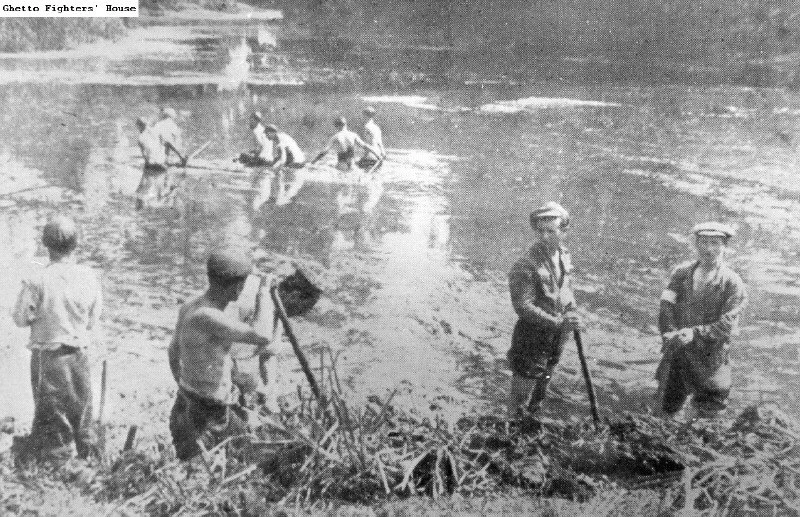
Slave labor in Kotsk during the Holocaust.
How the synagogue looked.