Remember Jewish Wysokie (near Zakrzew and Bychawa, Lublin)
Pronunciation: Vye-sock-ee Loo-belsk-ee
HISTORY OF JEWISH WYSOKIE
Wysokie is a town located 24 km. south of Lublin and has a current population of 600 people. It is not the same as either Wysokie Mazowieckie or Wysockie Litewski / Wysokie Litewski.
Jews have resided in Wysokie (Lublin) since at least 1536. In 1787 there were 255 people in Wysokie, including 63 Jews. In 1886, there were 5,841 citizens in town, including 352 Jews (6%). In 1921, Wysokie had 2,187 citizens, including 352 Jews (16%). The 1939 population of Jews was 350 to 550.
In 1930s Poland, there was an increase in anti-semitic incidents; in Wysokie, Jewish citizens faced an economic boycott. Some Poles with nationalist beliefs promoted "Don't buy from the Jews" slogans.
NEARBY JEWISH COMMUNITIES
On the eve of World War II, the Wysokie municipality was home to 430 Jews, which included those in Wysokie proper as well as the villages of Dragany, Giełczew, Józefin, Maciejów Stary and Słupeczno. Jewish communities near Wysokie also existed, including: Nowy Dwor (20 Jews in 1939), Pilaszkowice (10 Jews in 1939), Studzianki (45 Jews) and Zakrzew (50 Jews). Information is available on some of the communities near Bychawa, including the following:
- Krzczonów: Krzczonów is a village north of Wysokie. According to the 1921 Polish census, the village was home to 96 Jews. On October 9, 1942, all the Jews of this municipality were formally ordered to relocate to the Bełżyce Ghetto collection point. According to this witness, the deportations of Jews from Bychawa, Jastków, Krzczonów, and Niedrzwica were conducted in the same manner and on the same dates. Most of the Jews assembled in Bełżyce were deported further two days later, on October 13. Those deemed unfit for labor, including the elderly and the children, were sent to their deaths at Treblinka. Some who had passed the selection arrived at the Poniatowa Concentration Camp, or the Piaski Transit Camp. Most of the deportees from Krzczonów shared the fate of the other Jews brought to Bełżyce. A few Jews, including Hella Gurfinkel, Ann Steinwurz, Jankiel Grynberg (Janusz Krzywicki) and the Huberman family (Chaim, Paulina and a group of close relatives) were able to escape the Holocaust.
- Niedrzwica: According to the Polish census of 1921, there were 65 Jews in Niedrzwica Duża, and no Jews in Niedrzwica Mała. The train station in Niedrzwica Duża was used to deport Jews to the Treblinka death camp, and a German Gendarmerie station was set up in the village. Its gendarmes played an active role in individual and group murders of both local and non-local Jews, as attested by Polish residents of the area during the investigation of Nazi crimes in Poland in 1967. In October 1942, the Jews of Niedrzwica Duża and Niedrzwica Mała were deported to the Belzyce Ghetto. Most of the Jews concentrated in Bełżyce were deported further, to the Treblinka death camp and the labor camp in the Piaski Ghetto.
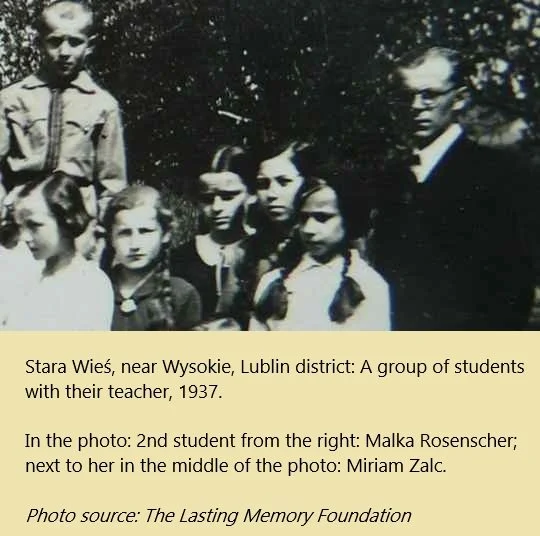
- Stara Wieś: Between Zakrzew and Bychawa, directly south of the town of Bychawa, was the village of Stara Wieś. This locale is north and east of Wysokie. According to The Lasting Memory Foundation and local resident Tadeusz Chrzanowski, the village of Stara Wieś was inhabited by 10 Jewish families before the Holocaust. In August of 1926, Berek Zylber and Szmul Diament were members of the voluntary fire brigade in Stara Wieś that was managed by Wojciech Mróz. Jewish residents remembered are Sana Zylbert (shoemaker) and family; Hersh Korn (shoemaker), wife and 4 children; Godel Zalc and family; Chemja (unknown surname) and family; the Rozenszer family, who moved to Żółkiewka. In September of 1940, around 50 Jews were relocated to Stara Wieś. Beginning in March of 1941, these Jews along with Jews native to the village were systematically murdered. In the fall of 1941, the remaining Jews in this location were marched to the Zolkiewka Ghetto and were subsequently murdered at Sobibor Death Camp.
- Urszulin: Urszulin had a pre-war Jewish population of around 50 Jews. None of them survived the duration of the war.
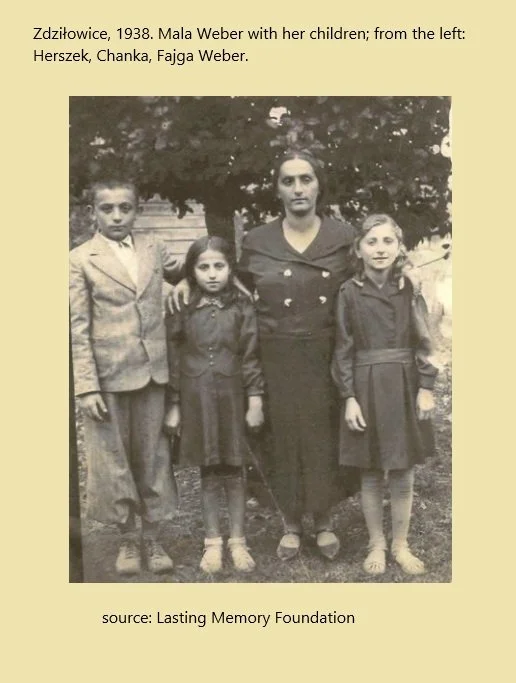
- Zdziłowice: According to The Lasting Memory Foundation, approximately 100 Jews were living in Zdziłowice. They engaged in small-scale trades like tailoring, shoe repair, and commerce. Many of the Jewish residents owned small shops. The names of some of the Jewish families who resided in Zdziłowice before 1939 have been preserved: Ajnwajner, Aptekarz, Berman, Bilerman, Brikman, Fabrykant, Fleiszer, Friedman, Fuchs (Fuks), Goldhochman, Klajnkaufman, Obermeister, Waldman, Weber and Zilber.
On September 7, 1942, German forces encircled Zdziłowice and herded the inhabitants onto a central square. They separated the Jews from the others, and shortly thereafter, marched them several hundred meters away and executed the Jewish residents by firing squad. On the way to the square, Mala Weber shouted to her daughter, Fajga: "Run!" Sixteen-year-old Fajga managed to reach Kraśnik, where she went into hiding with a local family. Two months later, when the final phase of the deportation of Jews from Kraśnik to Bełżec began, Fajga Weber fled into the Knieja Forest near Batorz. From there, together with a group of Jews, she made her way eastward, where they joined the partisan resistance and survived until liberation. After the war, she emigrated to Israel. We wish to honor the Christian residents of the village of Zdziłowice, many of whom were helping to hide Jews prior to this incident in 1942. As a consequence for their anti-Nazi stance, 120 Poles were also loaded onto transports and deported to Majdanek, and later to the camp in Pustków, where 43 of them were murdered.
WYSOKIE DURING THE HOLOCAUST
Very little is known about Jews from Wysokie during the Holocaust. Before the Holocaust, anti-semitism was a consistent problem for Jews living in Wysokie. In March, 1941, 320 Jews from Lublin were deported to Wysokie.
In the spring of 1942, Nazis formed a forced labor camp in Wysokie. Soon after, around 200 Jews were transported there from Turobin and hundreds of Jews from surrounding towns were also sent to it.
In March 1942, local Jews were transported by the Nazis to Izbica; from there, they were sent to the extermination camp at Belzec. In April, 1942, 500 Jews from the Wysokie ghetto were dispatched to Turobin. From there, they were sent to their deaths at the Sobibor gas chambers. In mid-May 1942, 200 more Jews from Wysockie ghetto were dispatched to the Sobibor extermination camp.
In autumn of 1942 (either October or November), the camp in Wysokie was liquidated and all remaining Jews were sent to Izbica ghetto; from Izbica, they were sent to extermination camps (probably Belzec, though possibly Sobibor). In all, 500 Jews from Wysokie and 250 or more from nearby locales were murdered via the Wysokie ghetto. This final deportation marked the end of Jewish community in Wysokie.
NO TRACES OF JEWISH LIFE EXISTS
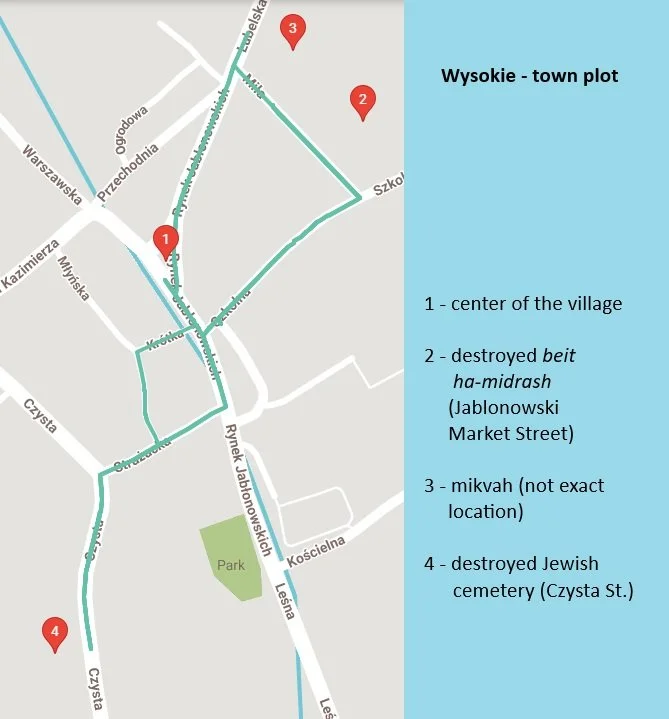
The former Jewish cemetery in Wysokie was located near Czysta Street, southwest of the town square. It is currently used as a pasture and is unmarked, without any grave markers or memorials. The precise location of the Jewish cemetery is not evident.
The Wysokie synagogue was also destroyed and no material traces of it, including where it was located, remain.
Please review the site content below. Zachor - We Remember.
------------------------------------------------------------------------
Join the Wysokie group on Facebook!
Town of Wysokie:
- Bychawa Yizkor Book (Translation)
Holocaust Survivors of Wysokie:
- Moszek Lieberbaum
Genealogy:
- Jewish Records Indexing Poland - Bychawa
- Jewish Vital Records in the Polish State Archives
Remember Your Family:
- Central Judaica Database - Museum of History of Polish Jews
- Grandchildren of Holocaust Survivors on Facebook
- Guide to the YIVO Archives
- Holocaust News/Events from Generations of the Shoah Int'l
- Holocaust Survivors and Victims Database
- JewishGen Family Finder
- JewishGen Holocaust Database
- JRI-Poland: Search for Your Family
- Museum of History of Polish Jews Introduction
- Yad Vashem: Search for Your Family
- Yad Vashem: Submit Names of Your Family Members
- Yad Vashem Requests Photos of Shoah Survivors and Families
CONTACTS
U.S.: LublinJewish@gmail.com