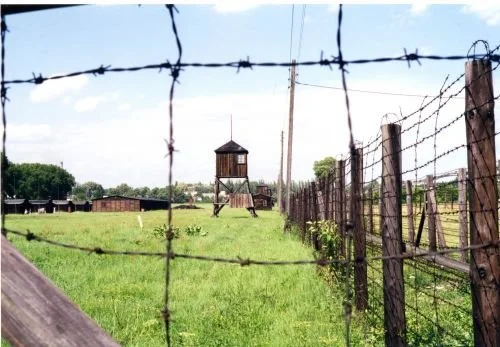
The Budzyn Remembrance Project
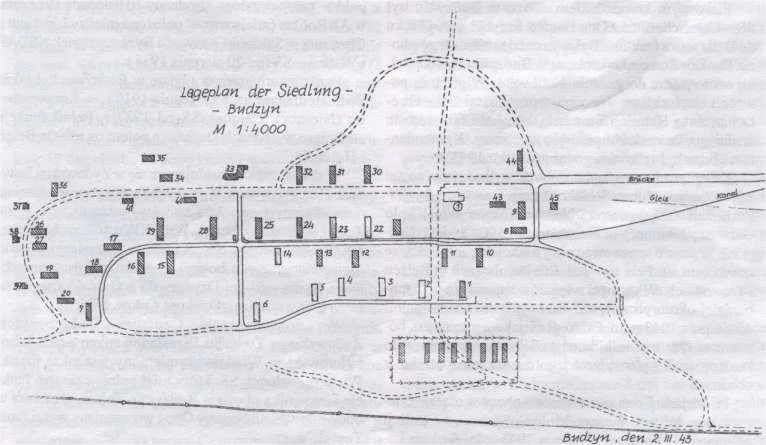
Right: Nazi plan of the Budzyń Housing Estate of 2 March 1943. In the southern (lower) part of the Housing Estate a camp is visible forced labor (area marked with X-shaped crosses).
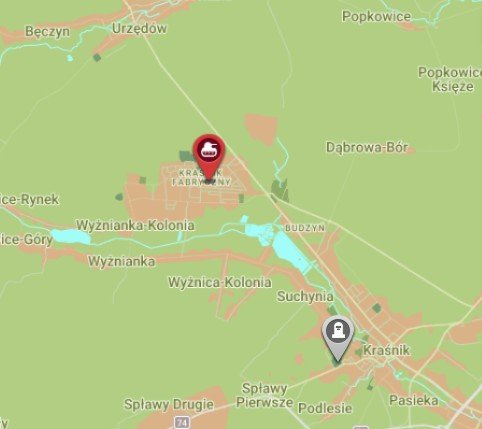
Red marker: Location of the Budzyn camp, north of Krasnik.
In the fall of 1942, a forced labor camp with Jewish prisoners was established in Budzyń (eastern Poland). Budzyń is a village in the Lublin Voivodeship, located 5 km north-west of the city of Kraśnik.
Beginning in 1937, an aircraft factory was established on the premises of a former munitions factory 3 miles north of the city of Krasnik. The complex was taken over by the Herman Goring Werke, a company operating steel works, mines and other heavy industries throughout Europe. After Budzyn became a labor camp, Jews were participating in forced slave labor at an aircraft factory operated by the Heinkel Company (Heinkel Flugzeugwerke) at Budzyn.
The first commander of Budzyń was SS-Unterscharführer Otto Hantke and was succeeded by SS-Oberscharführer Heinrich Stoschek. Before taking up his position in Budzyń, Hantke served as an S.S. man in the camp at Lipowa Street in Lublin. He was sent to Kraśnik personally by Odilo Globocnik as a "good organizer". Hantke was responsible for the selection during the final liquidation of the ghetto in Kraśnik. He personally selected the first prisoners when they reached the camp. He was also responsible for the first selection of sick prisoners who were deported to Bełżec Death Camp. This selection was carried out according to the order of Christian Wirth. The next, and most famous commandant of the camp, was SS-Oberscharführer Reinhold Feix (December 1942 – August 1943). Otto Werner Mohr was the commandant for a four-week period. Fritz Tauscher and Herbert Kurt Franke (also seen as Karl Hermann Franke) was also commandant. The last commandant was SS-Obersturmführer Josef Leipold, until June of 1944.
By mid-1943, the number of prisoners in the camp had increased to 3,000, including 300 women and children. The exact number of Jewish prisoners in Budzyń was given in the report of the Home Army from Kraśnik, dated March 15, 1944: 2,457 Jews including 319 women. This number of prisoners was lower than in 1943 due to executions and selection in the camp. The prisoners worked in a military factory, in construction and in services.
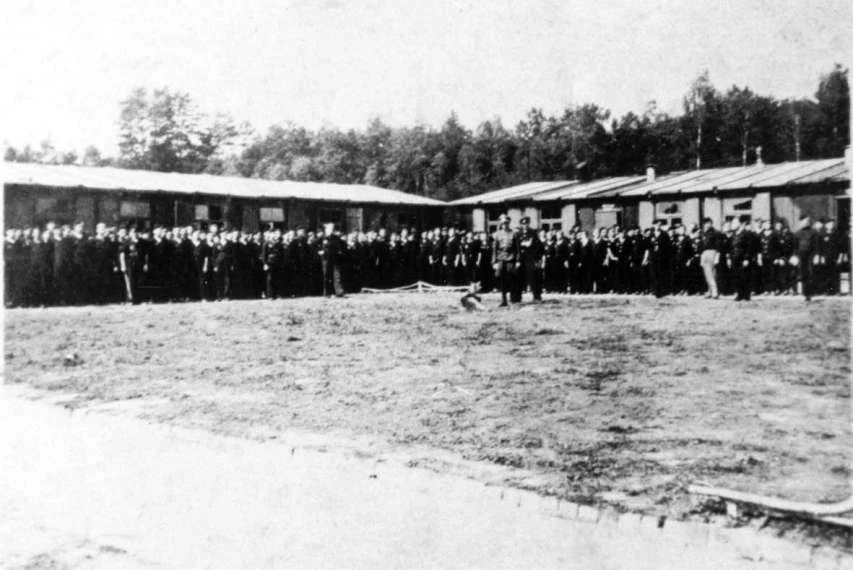
Feix organized mass public executions in the camp. Selected prisoners who were accused of all kinds of offenses were shot or hanged during evening roll-calls, on Appellplatz or just outside the camp fence. Sometimes the bodies of the victims were cremated at the place of execution. After each execution, the prisoners had to sing, most often the Polish tango "Marianna" and songs in Yiddish. A list of known S.S. personnel at Budzyn is listed here.
Among the known transports to Budzyn were:
-- Spring of 1942: 100 Jewish women from Bełżyce;
-- Spring of 1942: 500 Jews from Kraśnik and Janów Lubelski in Poland, Mińsk, Mohylów, Smoleńsk in Belarus, and prisoners from Vienna and Slovakia;
-- Spring of 1942: Unknown number of Jews from Hrubieszow, Goscieradow and Krychow Labor Camp;
-- December? 1942: 400 prisoners of war were transported from Końskowola and Lipowa 7;
-- Beginning of 1943: Last Jews of the Belzyce ghetto, including women and children, were transferred to Budzyn. This included a small group of German Jews from Stettin and Leipzig;
-- ~May of 1943: 1,000 Jews (who survived the Warsaw Ghetto Uprising) from Warsaw to Budzyń;
-- July 10, 1943: 200 Jews from Hrubieszow after the liquidation of the ghetto.
Budzyn officially became a concentration camp and became a sub-camp of Majdanek on 13 February 1944. Budzyn’s Jewish workers at the Heinkel factory were spared the fate of the other Jewish workers in the Lublin area, when all the Jewish workers in the labour camps were liquidated during the Aktion Erntefest in November 1943.
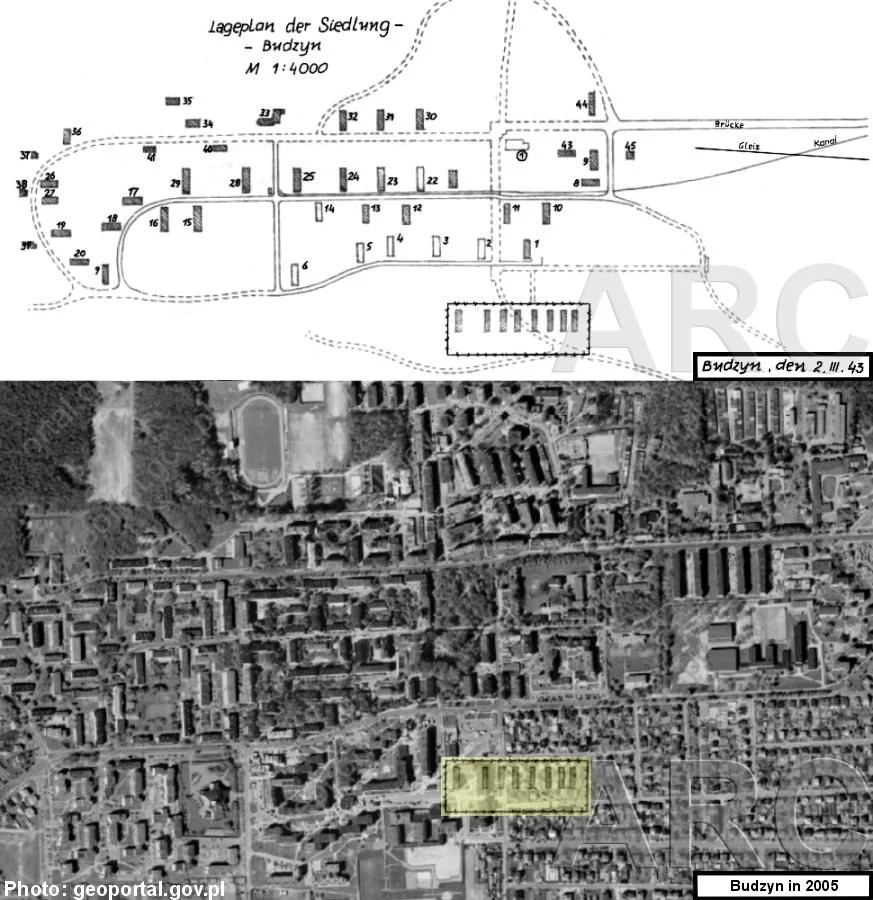
Additional Sources:
Additional sources related to Budzyn include:
1. The Encyclopaedia of Camps and Ghettos 1933-1945 (Volume 1). Indiana University Press. USHMM, 2012.
2. Majdanek – The Concentration Camp in Lublin by J. Marszalek. Interpress. Warsaw, 1986.
3. Sefer Krashnik by David Sztokfisz (Editor). The Organization of Krasnik Immigrants, 1973. 682 pages.
Budzyn Survivors:
- Benjamin Orenstein
- Jack Terry (Jakub Szabmacher)
- Max Edelman
Links:
- Historic Sites: Budzyn
- Leo Freitag Sworn Testimony about Budzyn Slave Labor, 1968
- Liberation of a Blind Survivor (Max Edelman, Budzyn survivor)
- Post-war report on the Heinkel-Werke Labor Camp in Budzyn
Return to Lublin Index