Majdanek Sub-Camps
The Majdanek Concentration Camp (pronounced Mide-on-eck), or KL Lublin, operated from October 1, 1941 until July 22, 1944. Majdanek also consisted of the following sub-camps:
- Airfield Labor Camp - Lublin (Alter Flugplatz)
- Sportzplatz Camp - Lublin (Ogrodkowa Street)
- Lipowa 7 Labor Camp - Lublin
- Belzyce Labor Camp
- Budzyn Concentration Camp
- Deblin-Irena Labor Camp
- Dorohucza Concentration Camp
- Milejow Labor Camp
- Naleczow Labor Camp
- Poniatowa Concentration Camp
- Trawniki Concentration Camp
Below is some information that is known about the Majdanek sub-camps:
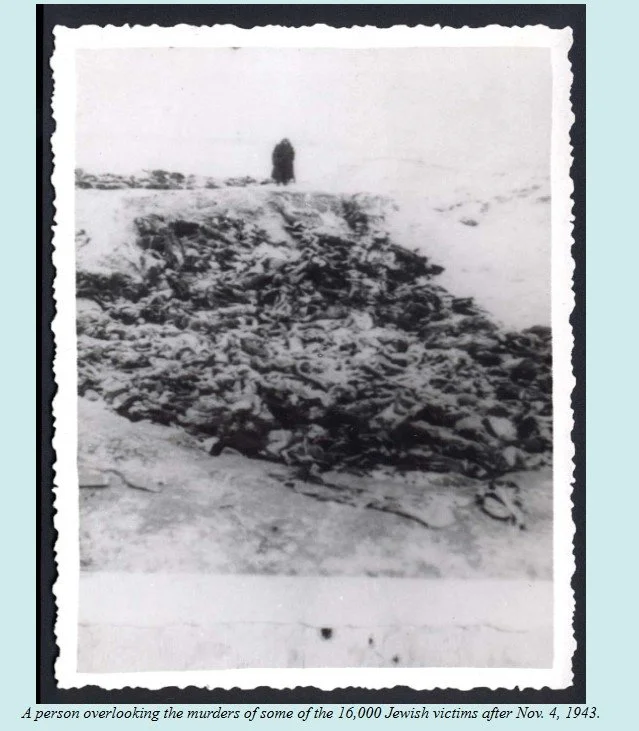
- Airfield Labor Camp - Lublin (Alter Flugplatz): The camp was established in July of 1940 and was located at the airfield of a former aircraft manufacturer. Its location was Fabryczna Street, 2 kilometers (1.2 miles) north of Majdanek. According to historian David Silberklang, at this site, Jewish property was handled and sold to Germans. A total of more than 6,000 prisoners were at the camp — mostly women. Conditions in the camp were difficult: there was no running water, there was no sewerage system, and only the workshops had light. The female guards in the Lublin-Majdanek camp guarded the prisoners. On November 3, 1943, beginning at 7:30 am, between 5,000 and 6,000 women in the camp were brought to nearby Majdanek, accompanied by the female guards on bicycles, where they were shot. According to historian Christopher Browning, the Reserve Bataillon 101 formed the sentries, while the SD did the shooting. Silberklang states that the SS-Division “Wiking” took part in the massacre. Music roaring from loudspeakers masked the salvos from the machine guns and the prisoners’ screams. Among the S.S. men at the Airfield camp were: Heinrich Birmes, Ernst Gollak, Otto Stadie, Kurt Bolender, Benno Winkler, Georg Dornberger, Hans-Dietrich Bamberg and Alois Morawitz. Gollak was sentenced to life imprisonment. Learn more about the Airfield Labor Camp here.
- Sportzplatz Camp - Lublin (Ogrodkowa Street): In the spring of 1942, a work camp was established on Ogrodkowa Street, close to the Sportplatz (sports stadium). It was surrounded by barbed wire and the prisoners worked in the factory building. Later in the year, three barracks were built near the factory building. The prisoners numbered around 600 people. Prisoners likely worked in the factory as well as on construction projects. The Sportplatz Camp existed until November 3, 1943, when they were murdered in the Aktion Erntefest. Learn more about the Sportzplatz Camp here.
- Lipowa 7 Labor Camp: see Lipowa 7 Camp (Lublin).
- Belzyce Labor Camp: More than 360 prisoners were held in slave labor at the camp. Belzyce had a slave labor camp operating separate from the ghetto, under the auspices of nearby Majdanek concentration camp. Workers at this location were in forced labor related to construction and infrastructure development. The camp operated until May 1943. At that time, yet another aktion took place -- this time the murders of 850 to 1,000 Jews, mostly women and children, in the Jewish cemetery. A final group of workers — 250 women and 350 men — were sent to Budzyn Labor Camp or the Piaski transit ghetto, where only a handful survived. The Jewish community in Belzyce ceased to exist. Of around 2,100 pre-war Jews in the town, only 35 survived the duration of the Holocaust.
- Budzyn Concentration Camp: see Budzyn Concentration Camp.
- Deblin-Irena Labor Camp: Dęblin is a town at the confluence of Vistula and Wieprz rivers, in Lublin Voivodeship. During the Holocaust, there were three different sub-camps where Jews were in slave labor at Deblin-Irena, with a total of 1,500 workers: (1) City camp: According to “Obozy hitlerowskie na ziemiach polskich 1939-1945,” the Nazis established a labor camp for 300 prisoners in Dęblin-Irena in April 1941. Slave laborers in this camp were forced to do different works on the area of the city. The camp was liquidated in October 1942, when the prisoners were taken Treblinka gas chambers. (2) Airport camp: In May 1941, the Nazis established a labor camp at the airport in Dęblin. Most of them were Dęblin's dwellers and Jews from Slovakia and Austria and included 1,000 Jews. Prisoners worked at expansion of the airport, in storehouses, and on the farm. In the camp there came to immediate executions by shooting or hanging. In July of 1944, , the prisoners were transported to Częstochowa. (3) Lipowa Street camp: From August 1942 to February 1943 on Lipowa St. in Dęblin existed the Nazi labor camp where Jewish slave laborers, mostly from Slovakia and Poland, built railway infrastructure. After liquidation of the camp, some prisoners were taken to Końskowola while others were sent to Dęblin Airport labor camp.
- Dorohucza Concentration Camp: see Dorohucza Concentration Camp.
- Milejow Labor Camp: Around 150 Jewish men worked in slave labor at a factory located between Leczna and Trawniki in the Lublin district. Many were sent there in spring of 1940 from Leczna. On October 28, 1943, 51 Jewish women were sent from Majdanek to the jam factory. On November 12, 1943, after the Jews from the Lublin camps had been murdered in the Erntefest, this group of 200 prisoners was taken to Trawniki and given the task of covering up the Nazi crimes. The dead Jewish bodies at Trawniki were cleared and then burned. The clothing of the murder victims was searched through and thrown onto a truck. The Jewish men from this group were all murdered at Trawniki on November 26, 1943. Under the threat of force, the group of 51 women at the camp were forced into slave labor — but kept alive. All others had been murdered. These Jewish women were tasked with cleaning up the camp and covering up the crimes. In June 1944, the women were transported to Lublin, and then were sent to Auschwitz, where some of them were liberated. (See the bottom of this site for a photo of some of these heroic women, along with some of their names.)
- Naleczow Labor Camp: see Naleczow Labor Camp.
- Poniatowa Concentration Camp: see Poniatowa Concentration Camp
- Trawniki Concentration Camp: see Trawniki Concentration Camp.