Remember Jewish Tomaszow Lubelski (Tomashov)
Prononunciation: Tom-ahh-shauv Loob-ell-ski
HISTORY OF THE JEWISH COMMUNITY
As early as 1595, the first wooden synagogue was built in Tomaszow Lubelski. Tomasz Zamoyski, owner of the town, granted privileges for Jews to settle in the town in 1621. By the end of 1643, there were already 60 houses inhabited by Jews. In the following years, the rabbis of Tomaszów were: Noah (died 1644), Yakov ber Uri Feviush (died 1649), Mordechai, Yehuda ber Nissan (author of Bet Yehuda), Reuwen Zelig ber Yakov, Pinchas Ber Moshe Katzenelenbogen, Chaim ber Mordechai, Elizer Lejzor Halperin (later Rabbi of Furth in Bavaria), Yehoshua, Moshe ber Yehuda Golin, Natan Nute Kahane-Shapira, Tzvi Kirsh Minc and Eliezer Pereles.
In 1700, out of the 205 Jewish families living here before, only 18 remained due to pillaging from the Cossack and Tatar troops led by Khmelnytsky. In the 1700s, the city became known for the rabbis who lived and taught in Tomaszow, and in the 1800s, Tomaszów became a strong center of Hasidism. The tzaddik Josef Gryn from Jarczów, a student of the Seer from Lublin, also lived in Tomaszow but then moved to Kotsk. The Najhaus family of tzaddiks founded its own dynasty in Tomaszow Lubelski. In 1868, Pinkas Singer (son of Shmuel, the synagogue assistant), the father of I.B. Singer, was born in Tomaszów Lubelski.
In 1827, 1,156 Jews lived in the city, constituting 43% of the total population. The vast majority of houses (including 413 wooden and 32 brick) in Tomaszow Lubelski were owned by Jews, and most of them were in the south-western section of the city. Jews owned factories for linen, hats, combs and soap. They also traded honey, raspberries and cherries. In 1898, 4,736 Jews lived in the city, constituting 59% of the over 8,000 inhabitants. In January 1910, among the 730 properties existing in Tomaszów, 401 belonged to Jews, 102 to Russians, and the remaining 227 to Poles.
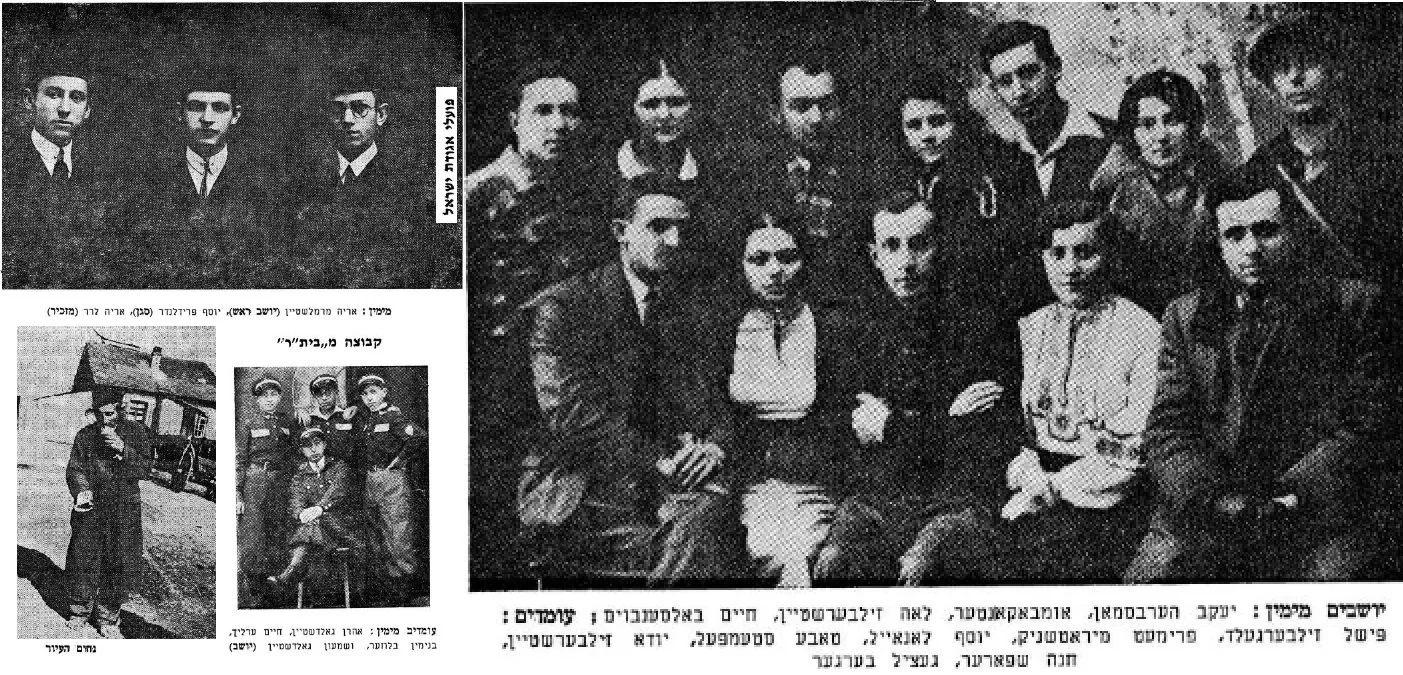
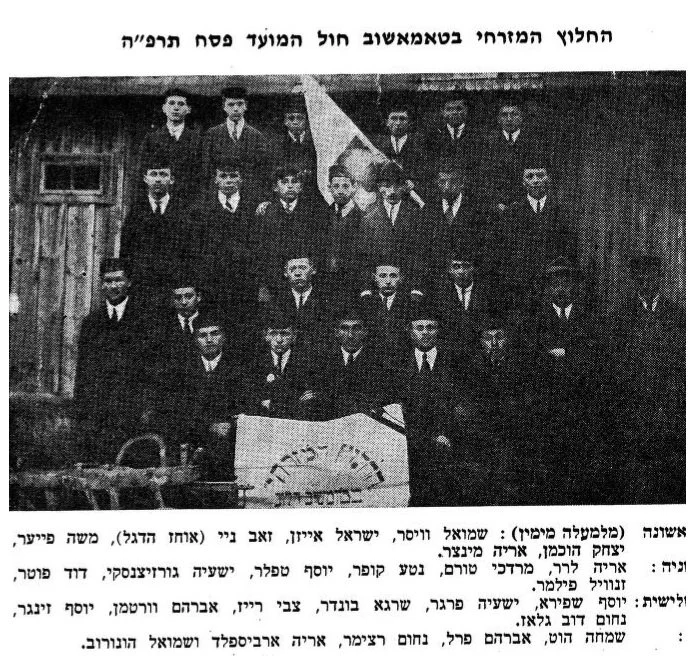
In the early 20th century, various types of Jewish social organizations and political parties emerged and operated in Tomaszów. Among them were the labor-socialist Bund, founded in 1907, and a local branch of the Poale Zion party, both of which garnered numerous supporters among the local proletariat. During the First World War, a local branch of the Mizrachi party, which united religious Zionists, was established there. These organizations, particularly Poale Zion and the Bund, also conducted extensive activities in the spheres of culture and education. Also active was the Zionist group Al ha-Miszmar, affiliated with the General Zionists Organization, which actively opposed the Orthodox Agudas Izroel. Tomaszów was also the base of the Jewish Socialist Workers’ Party Poale Zion (Right)—which combined socialist and Zionist principles—as well as the social-democratic Poale Zion (Left). The All-Jewish Labor Party was formed in 1931. In the 1927 elections to the City Council, the Orthodox won the most seats, three seats were won by the Bund, and one by the General Zionists.
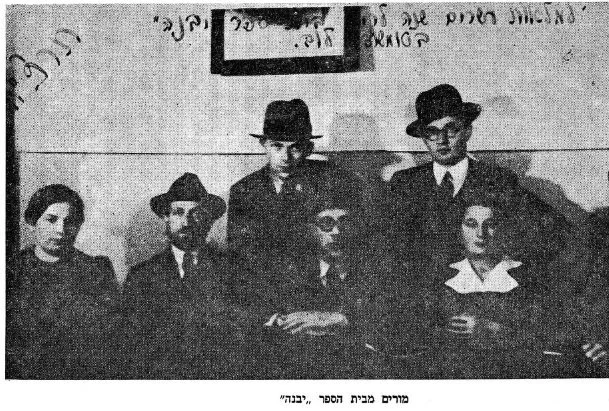
After Poland regained its independence, there were six registered cheders in the city. Some Jewish children also attended Polish public schools. Many private Jewish schools operated in Tomaszów, run in accordance with the ideologies of various political parties and organizations; these included Orthodox religious schools, which provided education rooted in Jewish traditions; National-Hebrew schools, which conducted instruction in Hebrew and emphasized the cultivation of national traditions; and secular schools. Tomaszów was also home to a school run by the Central Jewish School Organization (later the Union of Jewish Schools), as well as a school for women established on the initiative of Agudas Yisrael.
The S. Putter Agricultural and Industrial Machinery Warehouse in Tomaszów Lubelski was established in 1886. The owner was Samuel Putter, and the director was A. Hochman. The warehouse dealt with wholesale and retail trade in agricultural machinery. The Arie Heller company in Tomaszów Lubelski was established in 1899. In 1938, it was located at the Market Square. It was engaged in wholesale and retail trade in metal products and building materials. Arie Heller was born in 1870 in Tomaszów and his wife was Chana, née Goldsztajn.
From 1912 onwards, the charitable society Linas HaTzedek was active in Tomaszów. The cultural and educational organization Tarbut, which was under the influence of the Zionist movement, was active in Tomaszów; likewise active was the Kultur Liga, operating since 1926 and influenced by the Bund. Both of these organizations were dedicated to promoting Jewish culture as well as conducting and supporting educational activities. A Jewish library in Tomaszow, founded at the turn of 1918 by Zionists and Bundists, was the oldest institution of its kind in Tomaszów County. The local municipal library, established in 1929, housed a large number of works in Yiddish and Hebrew, constituting approximately 50% of its entire collection.
The Tomaszow Automobile Company was established in 1931 in Tomaszów Lubelski. In 1938, its headquarters were located at 11 Kościelna Street. The Management Board consisted of: Mordko Blank, Natan Szporer, and Pinia Wertman. Nine buses operated routes with a total length of 130 km from Tomaszów to Zamość, Tomaszów to Bełżec, and Tomaszów to Lwów. The company employed 14 workers.
An amateur theater movement also flourished in the city; the Circle of Stage Enthusiasts was active there, as was an amateur drama club established under the auspices of the Craftsmen’s Association. At the Tomaszów People’s House, Jewish groups — including Aron Binderman’s Jewish string orchestra — performed alongside Polish ensembles. A drama group was established by the attorney Sobol, and its participants included Dr. Idel Garzon, Cham Abraham Knop, Michael Horn, Nahum Schuldiner, and Meir Boim. The group produced many shows, like “Leil Seder”, “Smashed Hearts”, “Yeshiva Bokher", “Tevia the Milkman”, "Jewish King Lear”, and many others.
NEARBY JEWISH COMMUNITIES
Jews lived in nearby Belzec (100 Jews), Czarnystok (unknown Jewish population), Jarczow (400 Jews), Klatwy (unknown Jewish population), Krynice (unknown Jewish population), Laszczow (2,500 Jews), Majdan Gorny (unknown Jewish population), Michałów (18 Jews in 1921), Niewirkow (20 Jews), Poturzyn (unknown Jewish population), Przeorsk (unknown Jewish population), Rachanie (80 Jews), Radecznica (unknown Jewish population), Sulow (18 Jews), Szlatyn (34 Jews in 1921), Telatyn (unknown Jewish population), Wasylow (unknown Jewish population), and Wożuczyn (unknown Jewish population). Some information is known about Belzec, Rachanie and Wożuczyna:
- Belzec: Jews began settling in Bełżec in the second half of the 19th century. They were, for the most part, newcomers from Rawa Ruska and Jarosław. The influx of the Jewish population was linked to the settlement's advantageous location on the border between Galicia and the Kingdom of Poland. A house of prayer and a cheder operated in Bełżec. However, there was no independent Jewish community (kahal); instead, the Jews living in the town belonged to the communities in Lubycza Królewska and Narol. According to Robert Kuwałek, at the beginning of the 20th century, over 100 Jewish families lived there, subsisting mainly on cross-border trade. The 1897 census recorded 126 Jews out of a total population of 1,101. In 1921, their numbers stood at 109 individuals out of a total population of 1,960 (5.6%). During the interwar period, only a dozen or so Jewish families resided there. In 1939, Bełżec came under German occupation. A census of the Jewish population in Zamość County, conducted at the end of October 1940, showed 89 Jewish residents in Bełżec. In 1940, the Germans established a labor camp there, to which they deported several thousand Jews from the General Govournement, as well as members of the Roma/Gypsy population from Poland and Germany. The prisoners were engaged in the construction of an anti-tank ditch, sections of which have survived to this day. The local Jewish population was murdered and subsequently, after the construction of the Belzec Concentration Camp, this locale became notorious as a mass murder and execution site. See: Belzec Death Camp.
- Michalow: A sugar manufacturing plant was located in the village of Wozuczyn, about 1 km. northwest of Michałów. A few dozen Jews, among them families, including adolescents, children and elderly people, worked in the plant and lived in a barracks in the sugar processing complex. In November 1942, Jews from Michałów were marched to the sugar factory, ahead of their murder. According to a local Pole, Danuta Jachimska, from Wozuczyn, four or five Jewish families, including children, arrived at the factory from Michałów, and possibly also Jews from other villages in the area. Marian Ż., a local resident, was 11 years old when he watched the event from the first floor of the house he lived in, near the factory. He later recalled: “In November 1942, 72 were murdered against the wall of a barracks in the center of the Cukrownia Wożuczyn housing estate. Four military police man from the station in Rachanie arrived for the liquidation operation.” He added that the bodies of the murdered Jews were buried in a mass grave in a field “near a road called Lipki” (source: Yad Vashem).
- Rachanie: According to data from 1582, only five adherents of the Jewish faith resided there, while in 1862, that number stood at 22. As in other small towns, Jews earned their living primarily through trade, while the majority of Christians engaged in agriculture. According to data from 1921, 78 Jews lived in Rachanie, constituting a mere 7% of the population. A water mill, an oil press, and two taverns—all owned by Jewish entrepreneurs—were in operation, as were two grocery stores run by Jews. There was no synagogue in Rachanie; consequently, the Jews residing there likely utilized the synagogues in Komarów, Łaszczów, or Tyszowce. Private house of prayer may have functioned in Rachanie. The Jewish cemetery in Rachanie was located at 32 Patryzantow Street. It was located on a small hill in the eastern section of the village. The cemetery was destroyed during the Holocaust. It served Jewish adherents from both Rachanie and Wożuczyn.
In the spring of 1940, the Germans resettled Jews from surrounding localities to Rachanie. They were confined in barracks constructed within the settlement and subjected to forced labor involving the drainage of meadows. In the autumn of 1940, a group of approximately 100 elderly Jews, including women and children, arrived in the town; according to witnesses, they were shot by the Germans and buried near the local school. Also in the autumn of 1940, local Jews engaged in digging drainage ditches were executed by firing squad. The building of the primary school at 47 Partyzantów Street served as the headquarters of the German gendarmerie. Next to this locale was a labor camp where Jews were engaged in reclamation of grasslands. There were 12 barracks here for the prisoners to sleep in. During the occupation, more than 200 Jews were detained, tortured, and murdered at this labor camp.
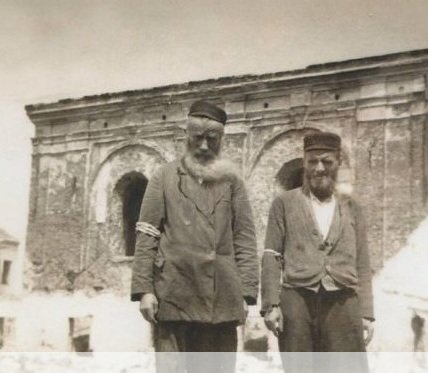
A ghetto most likely existed in Rachanie. A photo exists of two Jews in Rachanie with the Star of David armband. The man has a Judenrat armband.
- Telatyn: In 1856, Telatyn had 743 residents, including 35 Jews.
- Wożuczyn: In the 1880s, 18 Jews lived there, engaging mainly in small-scale trade of food products, crafts, and the provision of financial services. There was a massacre at Woluczyn’s sugar factory in 1942.
TOMASZOW LUBELSKI DURING THE HOLOCAUST
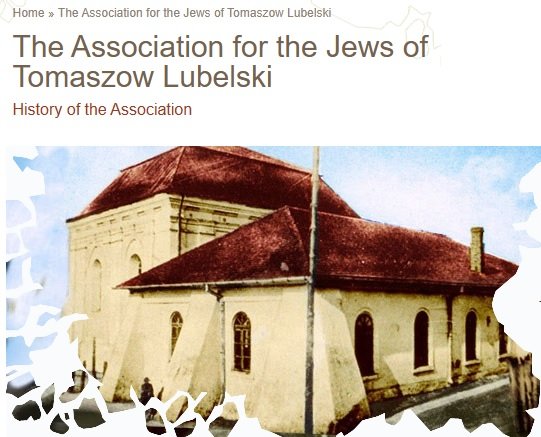
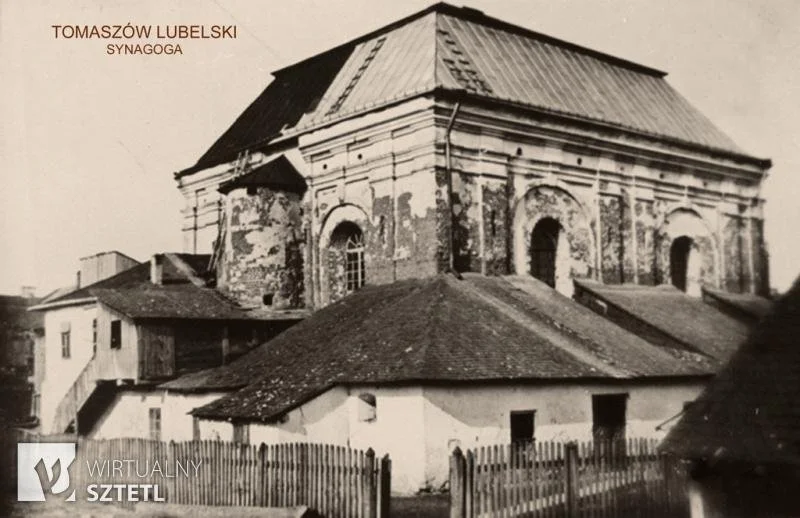
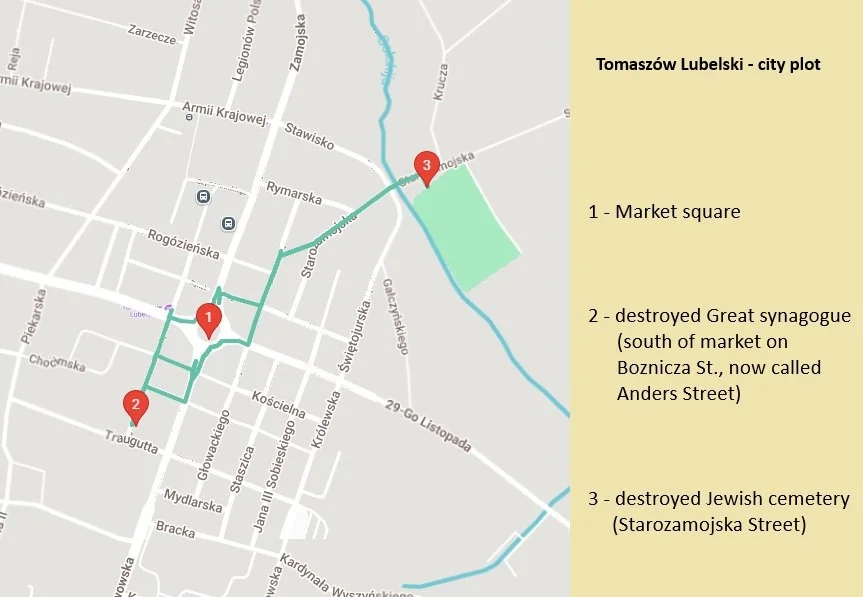
Close to 6,000 Jews lived in Tomaszow Lubelski in 1939. The Jewish community had a brick synagogue from the 1600s, a one-story house of prayer, a mikvah, a cemetery at Starozamojska Street, and a ritual slaughterhouse.
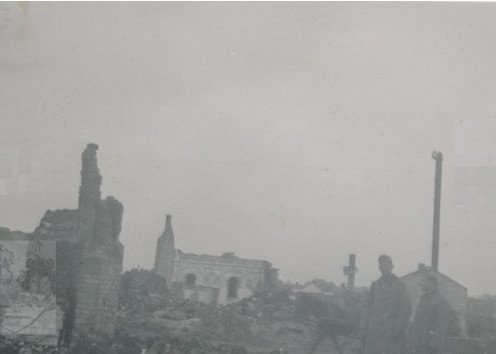
During the bombing of the city by the German air force in the very first days of World War II (September 7-9, 1939), most of the Jewish quarter, located between the market halls at the market square and the former defensive walls, was burned. The synagogue and houses of prayer were destroyed. Many Jews died then.
Subsequently, robberies of Jewish property and mass persecution of Jews began, however many in the Jewish community decided to flee the city at the urging of Rabbi Arie Leib Rubin. Around 4,000 Jews fled into the Russian Zone at this time, leaving around 1,500 Jews remaining in Tomaszow Lubelski.
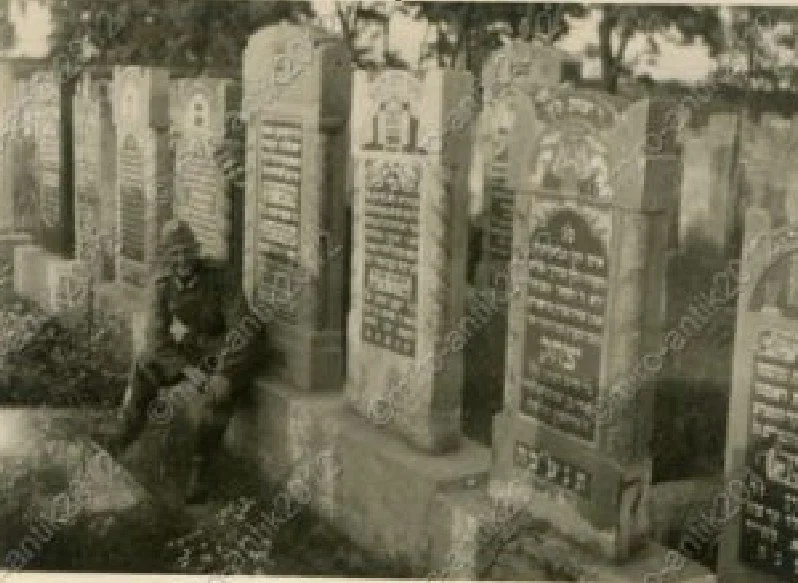
The Jewish population was concentrated in a dozen or so houses located mainly on Piekarska Street, where an open ghetto was soon created. The Germans devastated the cemetery, and the remains of the synagogue remained after the bombing were blown up in 1940.
At the beginning of 1942, the ghetto was closed, and in March, 1942, 500 Jews were forced to relocate to the Cieszanów Labor Camp. On May 22, 1942, this group was transported to the Belzec Death Camp.
From April 1942 to August 1943, a Nazi forced labor camp operated in Rachanie, situated next to the school. It held approximately 100 prisoners. The laborers were forced to perform land reclamation work.
Mendel Heller, Shimon Goldstein and Meir Kalechmacher from Tomaszow Lubelski had formed a partisan unit in the Rogozno Forest. They were armed and had killed several Nazis. Local Poles informed on them; the Germans surrounded them, and after a short battle, they all fell. הי”ד
The liquidation of the Tomaszów ghetto took place at the end of October 1942, when the Germans transported some of the people remaining Jews to Bełżec Death Camp in trucks, while others were shot and buried at the Jewish cemetery. The last of the Jews from Tomaszów, Szymon Leja, was murdered on November 9, 1943.
WHAT REMAINS
Out of 5,669 Jews from Tomaszow who lived there in 1939, only 49 are known to have survived the Holocaust. While many Jews did flee during the initial German invasion, it is likely that that group were killed in places such as Vladimir Volynsky (Ludmir), Rowno, Lutsk, or other locations in Volhynia district (modern Ukraine).
The old Jewish cemetery in Tomaszow is located on Starozamojska Street and 250 meters to the northeast of the market square, on the Sołokija River. It was established in 1623. There is a memorial erected in the 1990s. An ohel was designed by Eleonora Bergman, also in the 1990s. The keys to the gate are held by a private resident in the community. Few grave markers remain. A memorial stone with a star of David and three symbolic dates engraved on it exist at the cemetery: 1623, 1943, 1993. They mark the year of establishing the cemetery, Tomaszów Jews’ annihilation and reconstruction of the cemetery.
The mikvah was located at Szkolna Street. It was destroyed during the Holocaust. The destroyed synagogue is located at the Traugutta Street/Anders Street insersection, south of the market square. It was brick and built in the early 1600s and then re-built in the late 1600s. The synagogue was blown up by the Nazis in 1940.
ADDITIONAL SOURCES
In 1965, the Tomaszów Relief Committee in New York (Yiddish: Tomaszower Hilfs-Komitet in Nju Jork) published a memorial book dedicated to the Jewish community of Tomaszów Lubelski, titled Tomaszower Lub. Jizker-buch: poh nihtav toldot jiszuw Jehudi raanan, pericha, szigszug, awdon we-kiljon k.k. Tomaszow de-Lublin mi-jom hiwasda we-ad churbana. The original version is available through the Yiddish Book Center. An English translation can be found on the JewishGen portal. In 1972, the Association of Former Residents of Tomaszów Lubelski (Hebrew: Irgun Jocej Tomaszow Lub.) published a book in Tel Aviv dedicated to the Jews of Tomaszów Lubelski, titled Sefer zikaron szel Tomaszow-Lub. It is available on the Yiddish Book Center portal. In 1968, in New York, Mifal ha-Segula, with the assistance of the Memorial Book Committee of the Holy Community of Tomaszów Lubelski (Hebrew: Waad le-Hocaat he-Sefer le-Zikaron Kehilat Kodesz Tomaszow de-Lublin), published a book on the history of the Jewish community of Tomaszów Lubelski titled Pinat jikrat. We-hu sefer-zichronot diwre ha-jamim szel kehilah kedosza be-ir Tomaszow Lubelski. The book is available on the Yiddish Book Center portal.
Other sources about Tomaszow Lubelski’s Jewish community include: (1) Arad Y., Belzec, Sobibor, Treblinka: The Operation Reinhard Death Camps, Bloomington-Indianapolis 1999. (2) Berenstein T., Rutkowski A., Eksterminacja Żydów na ziemiach polskich w okresie okupacji hitlerowskiej. Zbiór dokumentów, Warszawa 1957. (3) Heberer P., Ciągłoć eksterminacji. Sprawcy „T4” i „Akcji Reinhardt”, [w:] Akcja Reinhardt. Zagłada Żydów w Generalnym Gubernatorstwie. D. Libionka, Warszawa 2004. (4) Jasina Ł., O pierwszej, polskiej monografii obozu zagłady w Bełżcu, “Midrasz” 2005, nr 7-8, ss.16-18. (5) Kola A., Hitlerowski obóz zagłady Żydów w Bełżcu w świetle źródeł archeologicznych. Badania 1997–1999, Warszawa-Waszyngton 2000. (6) Kozyra A., Historia osady w XIX–XX w., [w:] Bełżec przez dzieje, A. Urbański, Bełżec 2008. (7) Kuwałek R., Z Lublina do Bełżca. Ślady obecności i zagłady Żydów na południowo-wschodniej Lubelszczyźnie, Lublin 2007. (8) Kuwałek R., Obóz zagłady w Bełżcu, Lublin 2010. (9) Luxenberg-Eisenberg F., Hansen A., Weinberg I., Belzec Project. Forgotten tears and shadows!, Timisoara 2014. (10) Maranda M., Nazistowskie obozy śmierci. Opis i próba analizy zjawiska, Warszawa 2002. (11) Marszałek J., Rozpoznanie obozów śmierci w Bełżcu, Sobiborze i Treblinceprzez wywiad Armii Krajowej i Delegatury Rządu Rzeczypospolitej na Kraj, „Biuletyn Głównej Komisji Badania Zbrodni Przeciwko Narodowi Polskiemu” 1993, t. 35. (12) Marszałek J., System obozów śmierci w Generalnym Gubernatorstwie i jego funkcje (1942– 1943), „Zeszyty Majdanka” 1996, t. XVII. (13) Mularczyk A., Bełżec – kopalnia złota. Reportaż z pustego pola, „Świat” 1956, nr 17. (14) Reder R., Bełżec, Kraków 1999. (15) Tregenza M., Bełżec – okres eksperymentalny. Listopad 1941 – kwiecień 1942, „Zeszyty Majdanka” 2001, t. XXI. (16) Tregenza M., Christian Wirth a pierwsza faza "Akcji Reinhardt", „Zeszyty Majdanka” 1992, t. XIV. (17) Weinberg I., Holocaust research — Belzec site of mass extermination, Kiriyat Tivon 2014. (18) Zonik Z., Anus belli. Ewakuacja i wyzwolenie hitlerowskich obozów koncentracyjnych, Warszawa 1988. (19) Zieliński K., Jews of the Lublin Region, 1914–1918, Lublin 1999. (20) Trzciński A., Śladami zabytków kultury żydowskiej na Lubelszczyźnie, Lublin 1990.
Zachor - We Remember. Please review the site content below.
------------------------------------------------------------------------
[Project MUSE: Tomaszow Lubelski]
[Belzec Sub-Camps] [Remember Jewish Laszczow]
[Families of Tomaszow Lubelski] [Yizkor Book]
[The Massacre at Wozuczyn — Rachanie]
[3D Animation - Tomaszow Lubelski]
[Tomaszow During the Holocaust - Hebrew]
------------------------------------------------------------------------
The Tomaszow organization in Israel is active. Click here to access their website.
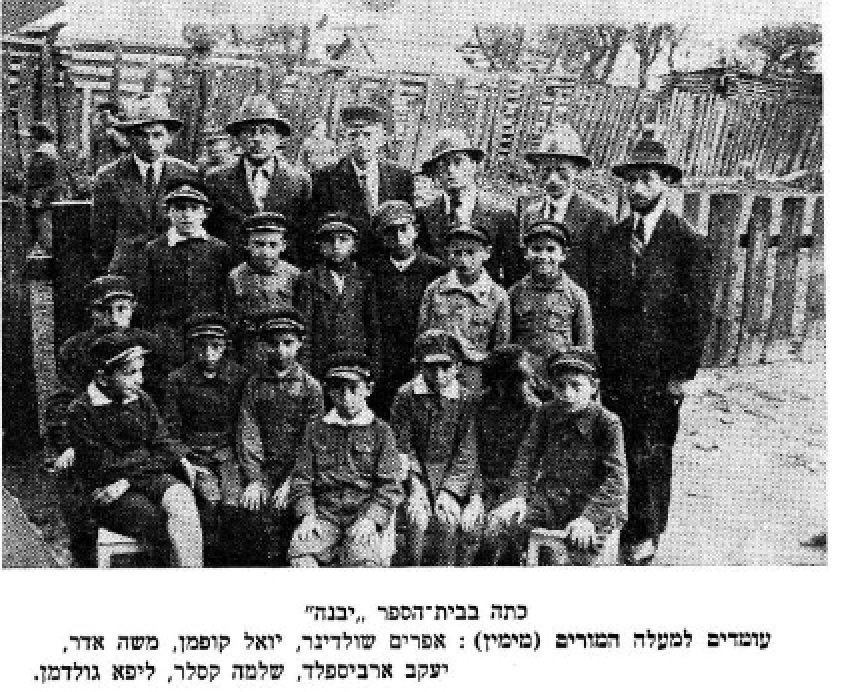
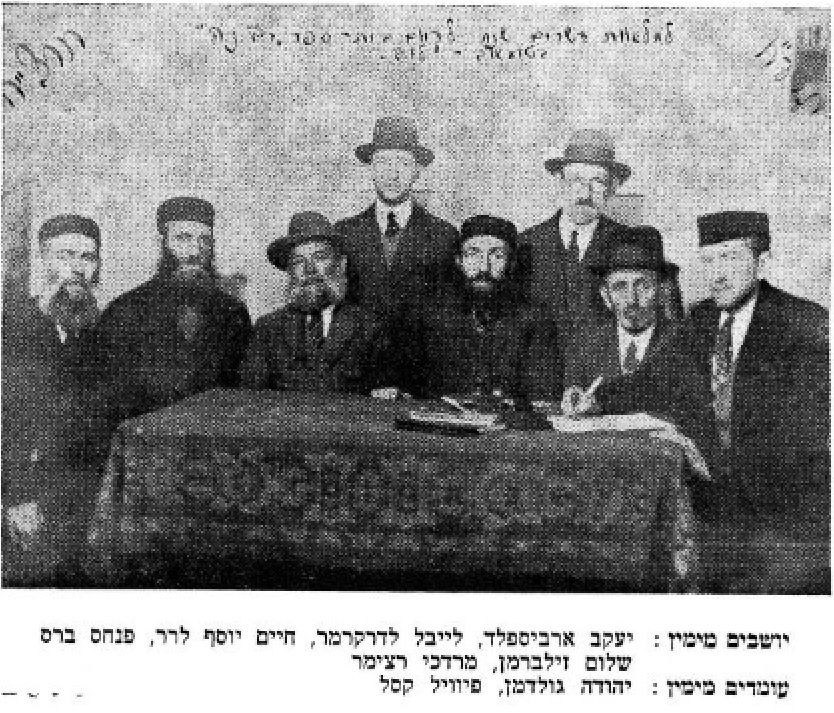
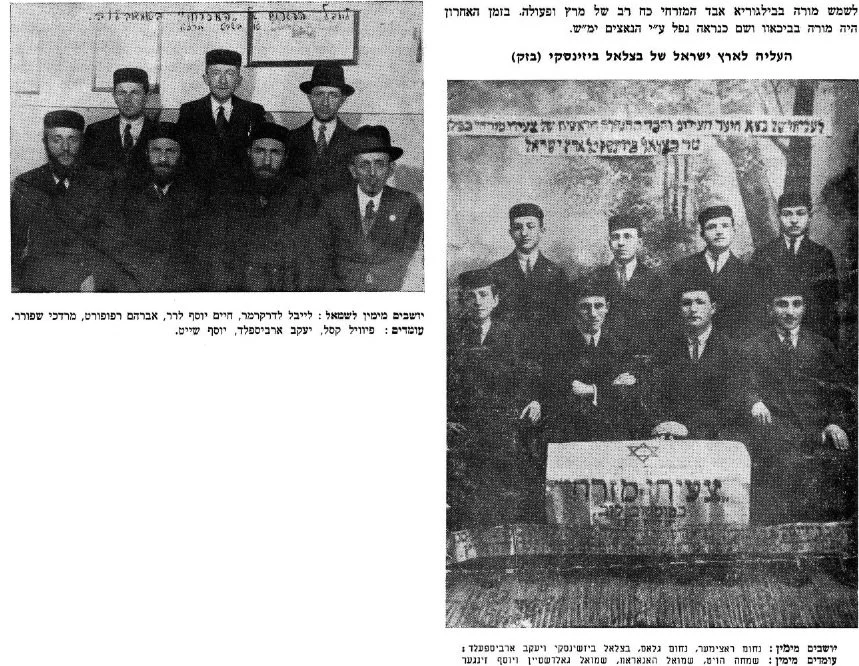
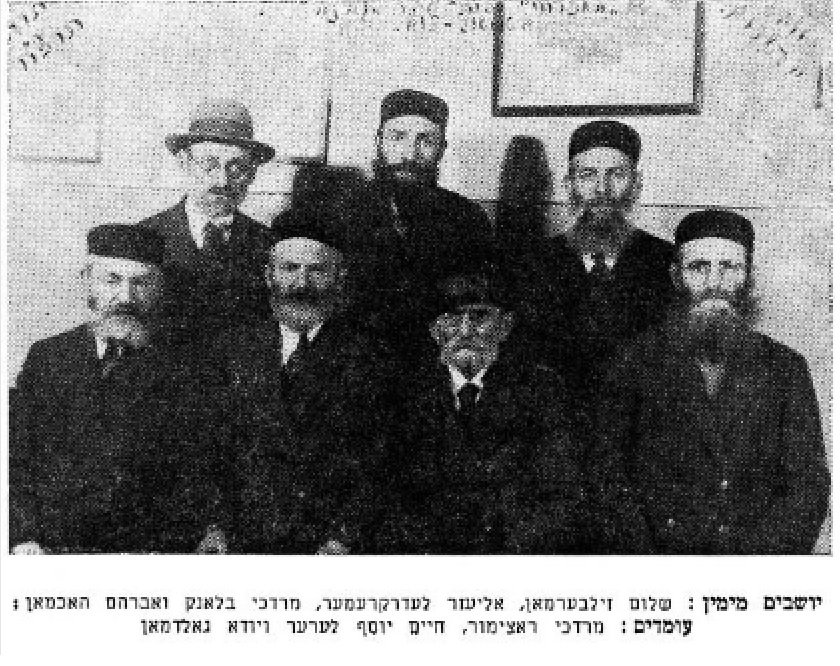
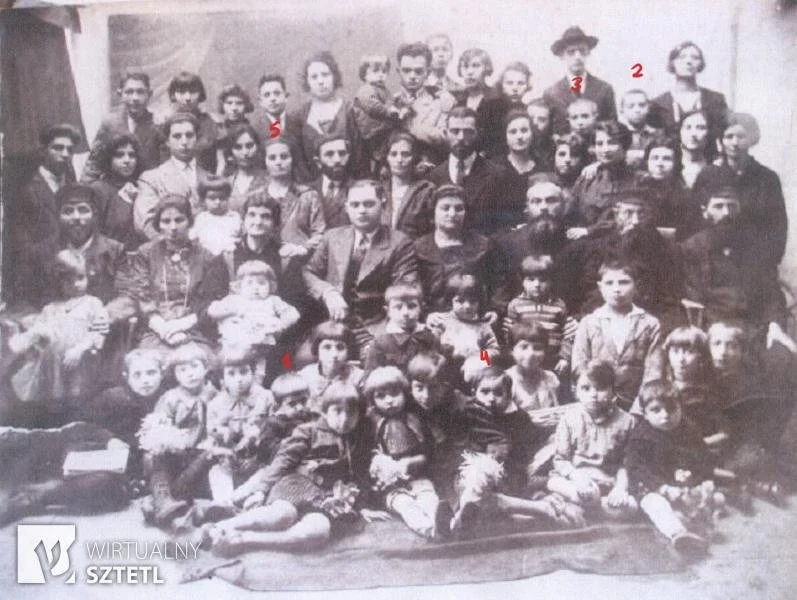
Erlich family from Tomaszów Lubelski, circa 1927. Numbered individuals: 1 – Szmuel Erlich; 2 – Pinkas Erlich; 3 – Chaim Erlich; 4 – Menachem Erlich; 5 – Fejga-Rywka Erlich.
The photograph was provided by Shmuel Amitay from his family archive.
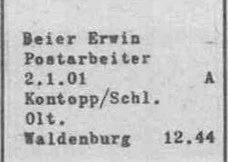
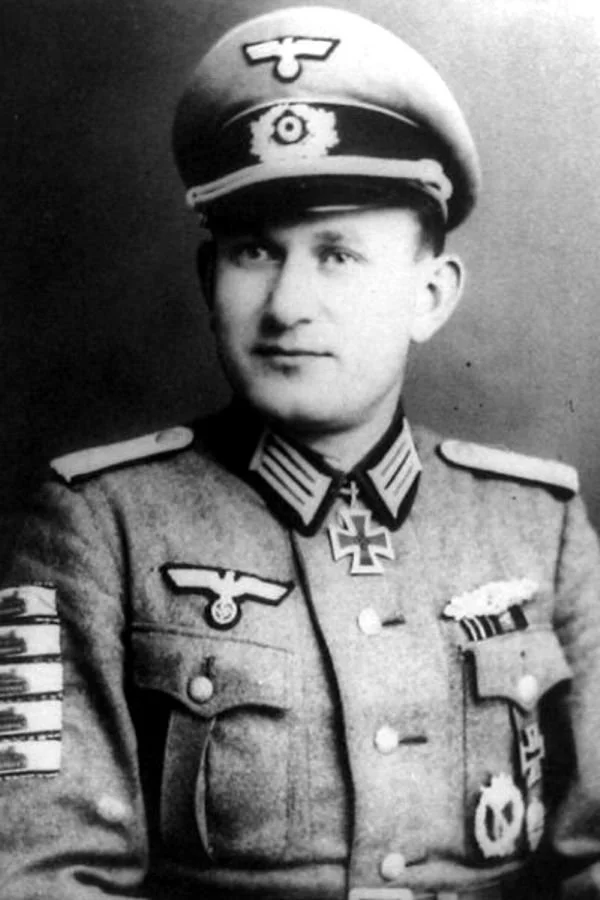
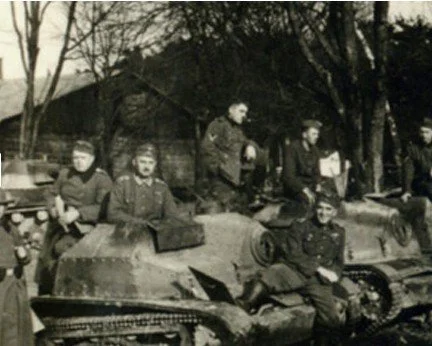
The S.S. operatives in Tomaszow Lubelski included: Hans Filler, Erwin Beier, Willi Bornemann, Kurt Doerge (Dorge) [also listed as Kurt Derger], Michael Eich, Ernst Dreier, Friedrich Gerkemeier, Balthasar Hofmann, unknown Kubin (probably Fritz Kubin), unknown Linkier, Josef Mayer, Walter Anzer (Panzer), Oberwachmaister Plumbau or Plumbaum, Ludwig Prokoff or Ludwig Prokop, Alois Rittelman, Ulrich Sporleder, Max von Hofenfels, Herman Ernst Wiese, S.S. Police Regiment 26 and S.S. Police Regiment 73. (NOTE: It is possible that ‘Panzer’ was a nickname for the Walter listed above and that his actual name was Walter Voigt.")
Collaborators with the Nazis in Tomaszow Lubelski included: Wladyslaw Kawalec, Wladyslaw Klimski, Franciszek Kuzniar, unknown Matuszkiewicz, Andrzej Mazurek, Ignacy Perczak, unknown Sierpinski, Bronislaw Smiech, Tadeusz Stawarski, Adela Tymińska and Stefan Zimnicki.
S.S. in nearby communities included: in Tarnawatka: Georg Mailander, Georg Simon; in Zwiartow: Jan Chmiel.
Left: A photo of Walter Voigt, who may be the Walter Panzer who was heavily involved in the murder of Tomaszow Lubelski’s Jewish population.