Remember Jewish Wola Uhruska
Pronunciation: Vola You-rusk-uh
HISTORY OF THE JEWISH COMMUNITY
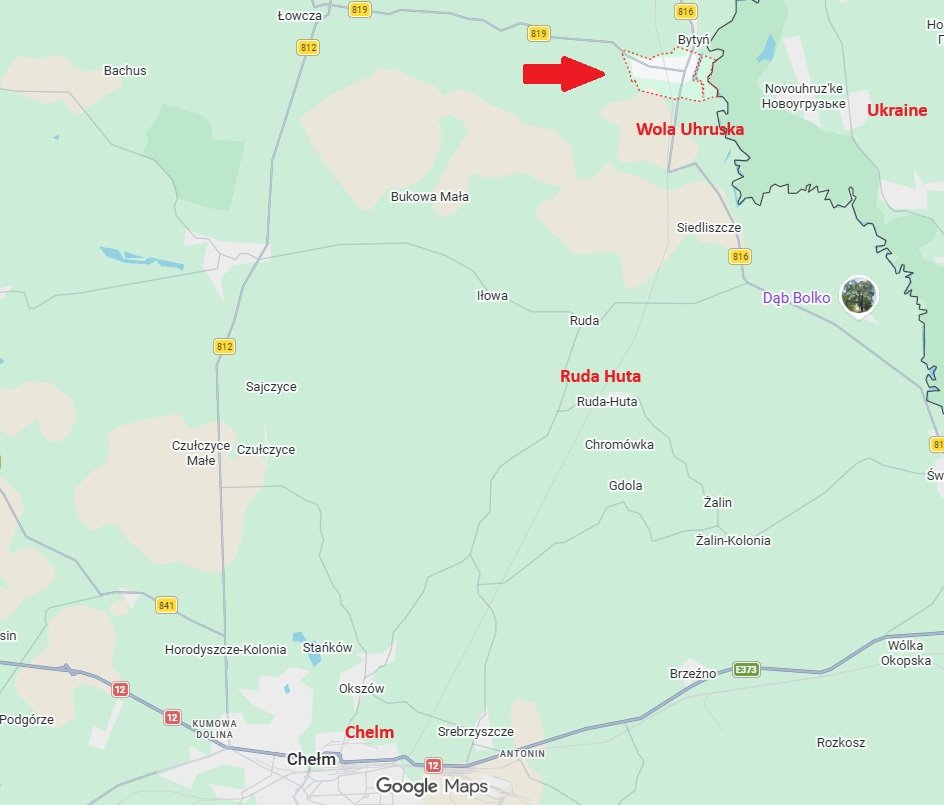
Wola Uhruska is a village in southeast Poland, with a population of around 4,100. The village lies approximately 27 km south of Wlodawa and 27 km north of Chelm.
In 1921, the village of Wola Uhruska was home to 58 Jews.
The village had a house of prayer run by Srul Djament. It was founded in 1902 and had approximately 15 attendees in 1922. It was only open on Saturdays and holidays.
JEWISH COMMUNITIES NEAR WOLA UHRUSKA
Jewish communities in rural villages near Wola Uhruska included the following:
- Kosyn: It is unclear what the pre-war Jewish population of Kosyn was.
- Mszanne: In 1939, the Jewish population of Mszanne village was 30 Jews.
- Piaski, Chelm County (not Piaski Luterskie near Lublin): In Piaski, a tiny village near Wola Uhruska, the pre-war population of Jews was around 35.
- Uhrusk: In Uhrusk, a house of prayer belonging to Mendel Lederer was established in 1907. It was only open on Saturday and public holidays. In 1922, the attendance at this house of prayer was estimated at 10 people. Uhrusk had a pre-war Jewish population of around 100 Jews.
- Wolczyny: In Wolczyny, a tiny village near Wlodawa, the Jewish community had a house of prayer which belonged to Szymon Majsterman, established in 1919. It was only open on Saturdays and public holidays. In 1922, the attendance at the Majsterman prayer house was ~10 individuals. It is unclear what the pre-war Jewish population of Wolczyny was.
- Zbereże: Zbereże is a village north and east of Wola Uhruska. The Jewish population was 12 families and approximately 60 people before the war. There were two elderly seamstresses. There was a glazier as well as a fisherman. One witness remembers a family called Ginzberg. They were all taken to Sobibor Death Camp. There is some information about Jews murdered in Zbereze: Jan D., a resident of Zbereże (born in 1928), witnessed the capture of a group of escapees from the death camp in Sobibór in 1943: “There was a German watchtower. There were ditches and mounds of earth about half a meter high. The ditches were left as a barrier against the guerrillas so that they would not attack the Germans in their beds while they were sleeping. From the inside, there was an opening to the outside. There were wire fences all around and a gate. When Jews escaped from Sobibór, they walked along this forest between the lake and Sobibór. And here they came across this watchtower and the Germans caught them. I was grazing the cows, because our pasture was here, all the way to the railway track. They got to the watchtower and the Germans saw them. I heard shots.”
WOLA UHRUSKA DURING THE HOLOCAUST
August 1940, there were 408 Jewish residents in the municipality, including communities in the following villages: Bytyń, Józefów village, Kosyń, Mszanka, Siedliszcze village, Sobibór village, Wola Uhruska, Wołczyny, Uhrusk and Zbereże.
The estimated 408 Jewish residents in 1939 were living as follows: Uhrusk — 100; Sobibór village — 72 people; Wola Uhruska — 65 (estimated); Zbereże — 60 people; Kosyń — 35 people (estimate); Mszanka — 30 people; Bytyń — under 20 people (estimate); Siedliszcze — under 20 people (estimate); Józefów village — under 20 people (estimate); Wołczyny — under 20 people (estimate).
The Judenrat was established by the Nazis and Itzhak Cyberman was put in charge of it with Pinkas Baum as the vice-chair. On June 28, 1940, thirty-five Jewish men were sent to a forced labor camp in the adjacent gmina of Hańsk, some 20 km. west. By June, 1940, the population of the Wola Uhruska ghetto had decreased to 342. Deportations to Wola Uhruska took place, including 26 Jews from Lodz (August 1940) and 77 Jews from Krakow (December 1942).
During the Holocaust, local Jews were subjected to forced labor, including the construction of the Sobibor Death Camp. Józef Cholewa, a Polish railway worker from Uhrusk, recognized a few Jewish acquaintances from the village working at the camp, and he also saw the Germans shoot one of them, a man named Baum.
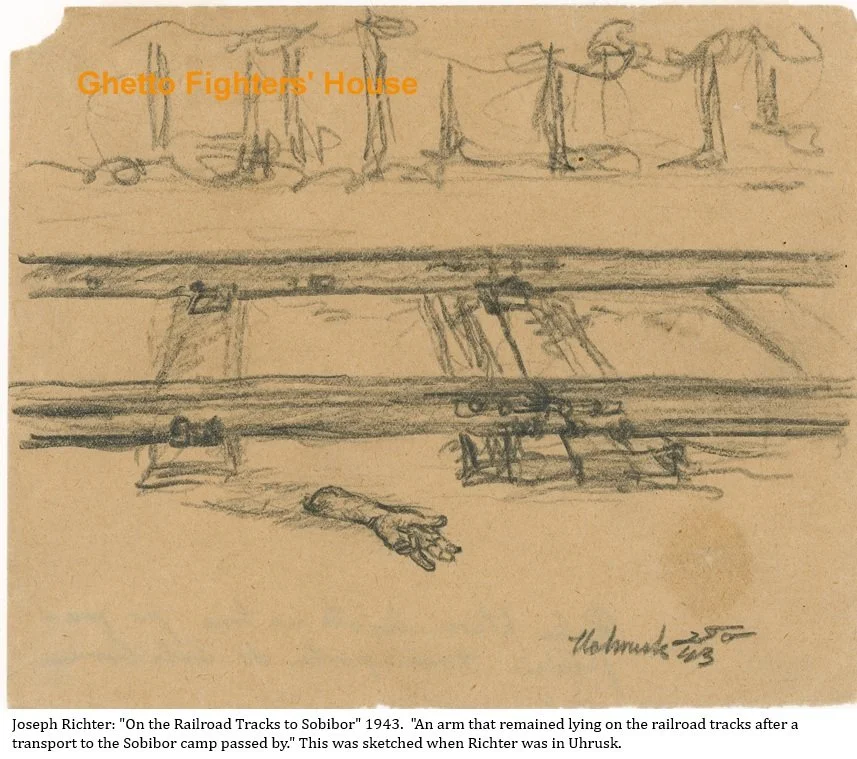
Bronisław Lobejko, another Polish railway worker employed at the Uhrusk and Sobibór stations, recalled these transports. Joseph Richter (Rychter), a Jewish man who had assumed a false Polish identity and may have been working at the Sobibór station, sketched the scenes that he witnessed there. His drawings, held at the Ghetto Fighters’ House Archives in Israel and shared below, are another testimony of these deportations. His 18 drawings, mostly in grey pencil without color, depicted life around the Sobibor camp in Lublin, Trawniki, Uhrusk and Sobibor.
After the war, Josef Richter’s drawings were found on a farm in Chelm, near Sobibor. Some sources indicate that Richter was a professional painter and photographer and had served in the Polish Army before the war. He apparently had a Slavic appearance and spoke fluent Polish, which allowed him to conceal his Jewish identity. He was recruited into a Polish labor group to the Baudienst (construction service) and sent to work on laying railway tracks near the Majdanek and Sobibor camps. During each visit to his friend Paszko's house, he entrusted him with the drawings. In 1942, with the help of Alexander Paszko, a Christian friend from his days in the Polish army, Richter obtained forged documents under the name Zbigniew Zaprzalski. It is likely that Richter was from the area around Chelm originally and may have been born between 1910 and 1920. He was killed circa 1944 while fighting with the Jewish partisans.
On October 22, 1942, the Jews of the village of Sobibór were deported, in horse-drawn carts and on foot, to the town of Włodawa, which served as a gathering point for all the Jews in the area. Two days afterward, they were sent on to the Sobibor Death Camp. According to Yad Vashem: “It seems likely that the same fate befell the 300 Jews of Wola Uhruska and the surrounding villages in the Sobibór municipality — in time for the mass deportation from Włodawa to Sobibor, which took place on October 24, 1942.”
Continues Yad Vashem: “The correspondence between the Wola Uhruska Judenrat and the Jewish Social Self-Help ended on October 1, 1942. On November 2, when the JSS sent medical supplies to Wola Uhruska and requested the receipt, the letter was returned to the sender with the following note, written in pencil on November 4:
‘Żydzi wyjechali’ — “The Jews departed”.
THEIR NAMES ARE ALL THAT’S LEFT
Known pre-war community members in Wola Uhruska included Icek Alt, Szmuel Libhaber, and Beniamin Porcelan as well as families such as Baum, Besser, Biterman, Diament, Dzięciół, Frydman, Gierszkowicz, Gutmacher, Mielnik, Rajf, Rotenberg, Sztatman, Tabak, Tepper and Zysblat.
WHAT REMAINS
Of the pre-war Jewish population, 5 Jews from Wola Uhruska survived the Holocaust. No synagogue site remains, and the Jewish cemetery location is also unknown/unmarked. No memorial exists to remember the pre-war Jewish community.
Zachor - We Remember. Please review the site content below.
------------------------------------------------------------------------
[Yad Vashem: Wola Uhruska Transport to Wlodawa, 1942]
[Jews murdered at Zbereze near Wola Uhruska]
[List of Poor Jews in Wola Uhruska Who Received Flour 12-20-1940 - JDC]
[List of Poor Jews in Wola Uhruska Who Received American Gifts 12-20-1940 - JDC]
------------------------------------------------------------------------
Wola Uhruska LINKS
Village of Wola Uhruska:
Sobibor Labor Camps
Labor Camp in Sajczyce
Labor Camps of Sobibor #1
Labor Camps of Sobibor #2
Labor Camp in Tomaszowka and Rudnia
Memories of the Jews of Sawin (in Polish
Sobibor Remembrance Project
Genealogy:
Gitel Erlich Kagan interview
Jewish Records Indexing Poland - Sawin
Jewish Vital Records in the Polish State Archives
Remember Your Family:
Central Judaica Database - Museum of History of Polish Jews
Grandchildren of Holocaust Survivors on Facebook
Guide to the YIVO Archives
Holocaust News/Events from Generations of the Shoah Int'l
Holocaust Survivors and Victims Database
JewishGen Family Finder
JewishGen Holocaust Database
JRI-Poland: Search for Your Family
Museum of History of Polish Jews Introduction
Yad Vashem: Search for Your Family
Yad Vashem: Submit Names of Your Family Members
Yad Vashem Requests Photos of Shoah Survivors and Families
CONTACTS
U.S.: LublinJewish@gmail.com
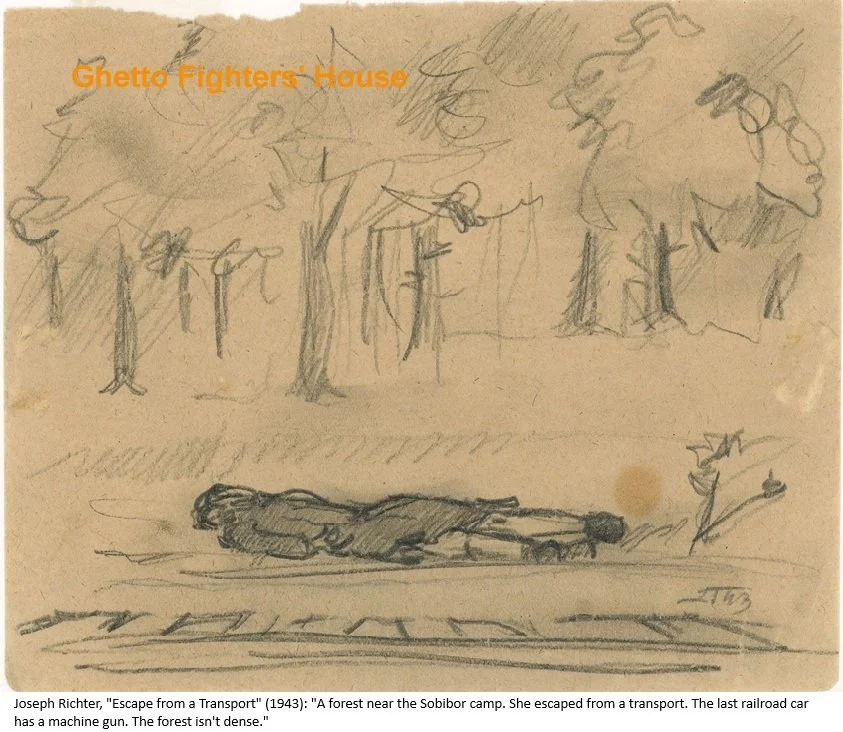
Right: A sketch from witness Joseph Richter, a Jewish partisan who saw this event and subsequently sketched it. Richter was in hiding. Later, he was murdered — likely in 1944.

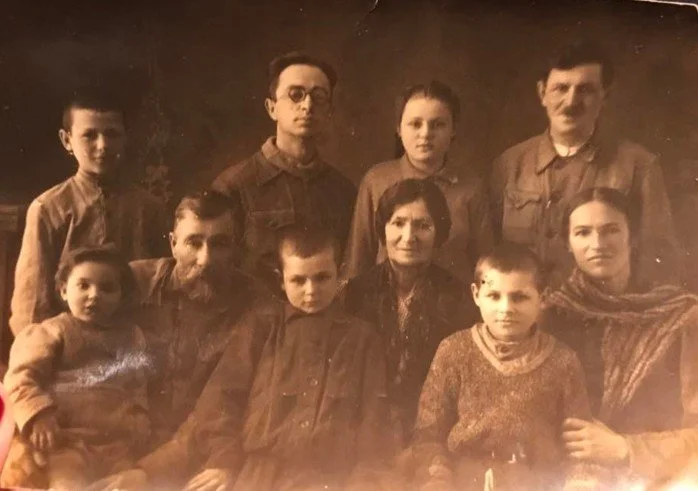
Kosyn, Poland: The Sztul (Stul) family, including Shmuel and his wife Tauba, nee Czesner.
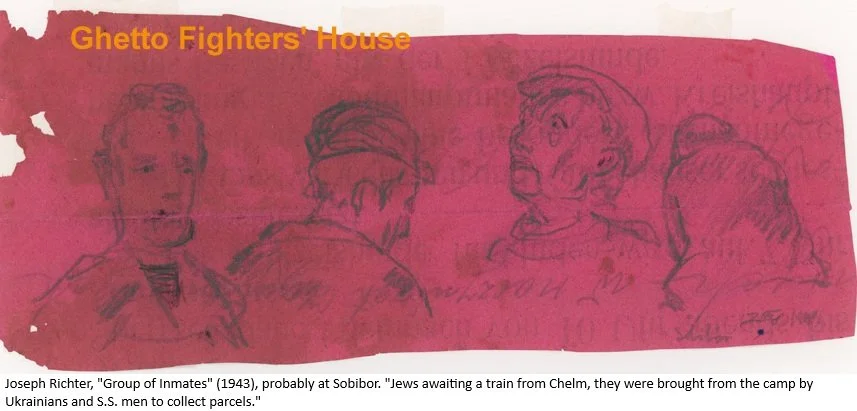
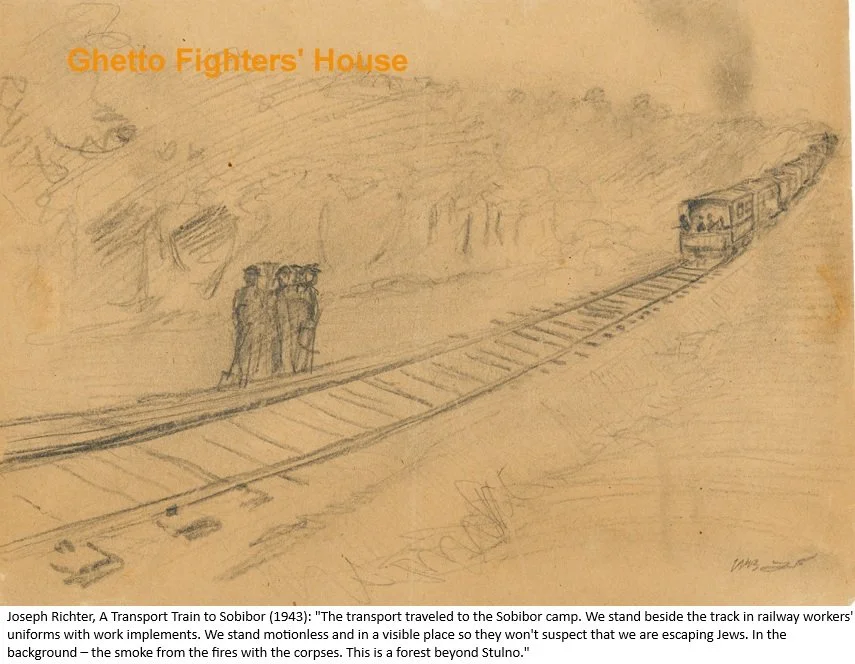
Right: A sketch from witness Joseph Richter, a Jewish partisan who saw this event and subsequently sketched it. Richter was in hiding. Later, he was murdered — likely in 1944.