Remember Jewish Krasniczyn
HISTORY OF THE JEWISH COMMUNITY
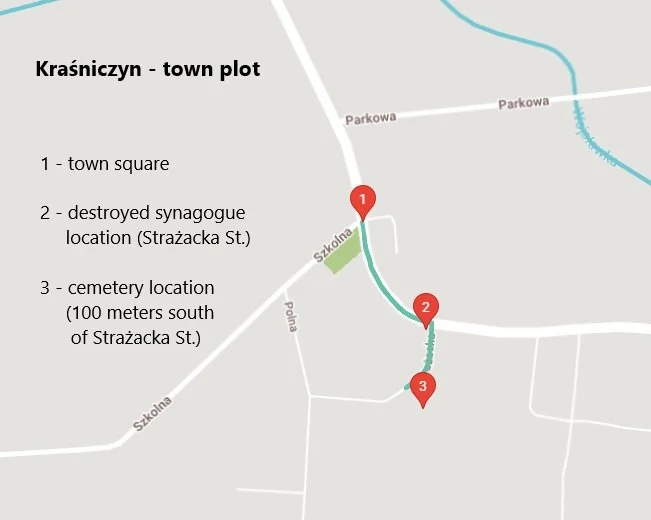
The first mentions of Jews in Kraśniczyn date back to 1618. In 1676, the town had a population of 116; however, sources do not provide the exact number of Jews residing there at that time. They lived primarily at the rear of the market square, on its eastern side, where the synagogue was also located. They engaged in trade and crafts.
As a result of a fire in 1734, the house of prayer, the Jewish bathhouse, and nine houses situated near the market square were destroyed. In 1756, the town contained 14 Jewish properties featuring cottages, as well as three vacant plots and several market stalls. In 1777, Kraśniczyn had 50 Catholic households and 24 Jewish ones.
The Jewish population in 1790 included 66 Jewish individuals. In 1821, Kraśniczyn had a population of 88 inhabitants, the majority of whom were Jewish. By 1920, nearly 90% of the population of the town (540 of 610 individuals) in town were Jewish. The Jewish community had a wooden synagogue, a mikvah and a Jewish cemetery.
The Association of Small Merchants in Kraśniczyn was established in 1921. It had 28 members and its president was Herszek Fuks. Jewish shops in Kraśniczyn had the following owners:
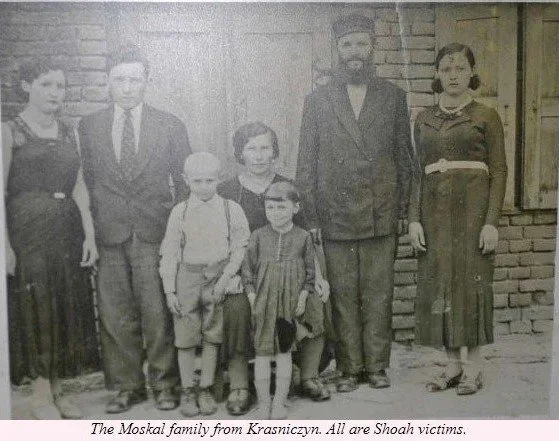
Clothes: H. Moskal, L. Rubinsztajn
Forestry: A. Aszkenazi, J. Nirenblat, M. Becher
Gas water (heaters?): Fuks
shoemaker: A. Zymmer
Glaziers: W. Warman
Skins: S. Klajner, D. Zylberman, Ch. Goldblad
Slaughterhouses: H. Becher, M. Becher, Sz. Becher, W. Lichtensztajn
Tailors: Ch. Birbaum – A. Gros – N. Helfman – K. Lederman – D. Moskal – H. Moskal
Textiles: G. Cukier, I. Goldwasser, B. Szydłowicz, Sz. Zymmer, J. Zylberman
Other branches of trade and craft in which Jews were active included:
Bakers: J. Cukier
Barley manufacturer: B. Becker, Sz. Fuks, Sz. Gros
Cattle: A Cukier
Egg sales: Sz. Gros, P. Wajcenberg, S. Apel
Foodstuffs: H. Fuks, C. Sanet
Grains: J. Becker, M.J. Blat
Other goods: T. Ajzenberg, E. Blat, Cukier, Ł. Fuks, M. Fuks, S. Goldwasser, M. Grinbaum, M Grinbajm, B. Groman, B. Helfman, G. Hochler, Ch. Klajner, J. Kozak, K. Lederman, H. Moskal, M Warman, Ch. Wertnan, B. Zylberman, D. Zylberman, R. Zymer.
After 1910, 35 Jews arrived in the settlement, including: 8 from Izbica, 6 from Wojsławice, 5 from Rejowiec, 3 from Dubienka, 2 from the Turka commune, and one each from Gorzków, Grabowiec, Lubartów, Siedliszcze, Szczebrzeszyn, Tomaszów, Uchańie, and Stary Zamość. In other villages within the synagogue district, the following Jews resided: Anielpol – Benjamin Zildersztajn, who arrived from Uchanie; Bończa – Simka Szibłowicz and Zindel Szibłowicz; Brzeziny – Mejer Szmul Bliat from Izbica; Drewniki – Mejer Licht or Lichter from Izbica; Kraśniczyn Aleksandrowski – Szelma Ehrlich and Chaim Goldfard; Surhów – Szlem Gdal Bliat and Abram Mangiel; Majdan Surhowski – Berek Taj; and Wojciechów Folwark – Mordko Acija from Wojsławice, Abram Bafigold from Warsaw, Lejzer Bergier from Grabowiec, and Wulf Litman from Izbica.
During the interwar period, cheders (religious elementary schools) operated in Kraśniczyn, led by the following melameds (teachers): Szymcha Betalojn, age 70; completed religious schooling in Warsaw; 4 boys; in operation since July 1932; Szloma Blat, age 50; no formal qualifications; 12 boys aged 3 to 6; in operation since 1928; Sucher Cukier, age 36; no formal qualifications; 12 boys aged 3 to 7; in operation since 1928; Moszek Fuks, age 42; no formal qualifications; 9 boys aged 7 to 11; in operation since 1930; Josek Lederman, age 70; no formal qualifications; 5 boys aged 7 to 10; in operation since 1885.
In addition to Kraśniczyn, the synagogue district encompassed the following villages: Anielpol, Bończa, Brzeziny, Drewniki, Czajki, Majdan Surhowski, Surhów, and the Wojciechów manor farm. Among those residing in Kraśniczyn in 1910 were Łajka Aizenberg, Tapchip Aizenberg, Abram Borek, Jankiel Bliat, Frankiel Bubiel, Abram Cukier, Sara Cukier, Berko Cukier, Abram Fiterman, Abram Gierszkow, Szmul Gros, Gierszko Rajc, Moszko Tuchman, Gierszko Tuchman, Jankiel Warman, and Abram Zimner.
On May 24, 1911, members of the synagogue board in Kraśniczyn were elected: Abram Zimner (aged 50), Gierszko Rajc (aged 38), and Tapchip Ajzenberg (aged 38). Rafał Kliger became the Rabbi. In 1914, the budget of the Jewish community in Kraśniczyn amounted to 299 rubles and 10 kopecks. Throughout the 1920s, Jewish entrepreneurs dominated the trade in grain, cattle, and timber. Jews owned the majority of the shops and craft workshops, as well as a slaughterhouse, a bakery, a groats mill, and a small furniture factory. The wealthiest Jew during this period was Icek Goldwasser, who ran a grain purchasing business and owned a textile shop and a forest lease. In 1921, Kraśniczyn had a population of 610 inhabitants, including 540 Jews (83%). In 1927, a fire destroyed a significant portion of the Jewish buildings. By 1933, 487 Jews lived in the settlement.
From 1919 onwards, a local branch of Poale Zion–Left existed there—led by Icchok Besler—as well as a cell of the Orthodox Zionist party, Mizrachi. The Orthodox party Aguda and the Organization of Non-Partisan Religious Jews were also active in the settlement; additionally, the All-Jewish Labor Party operated there between 1933 and 1934. Operating under the auspices of Poale Zion–Left, the Jewish Educational Association had been active since 1921. The Zionist youth organization He-Chalutz Pionier, comprising nine members, was also active in the town.
Krasniczyn had 610 inhabitants in 1921 and 540 of them (83%) were Jews. There were five cheders in the town. The Jews owned most of the shops and craft workshops (tailoring, leather stitching), as well as slaughterhouses, bakeries, hulling mills and a small furniture factory. Occupations in town during the pre-war period included: Hersz Fuks and C. Samet in groceries and S. Apel in egg selling; the Becher and Lichtensztajn families had slaughterhouses; Icek Goldwasser, the wealthiest man in town, had a haberdashery, as did G. Cukier, B. Szydlowicz, Sz. Zymner, and J. Sylberman. Ready-made suits were created by H. Moskal and L. Rubinsztajn. Mr. Fuks had carbonated waters. Processed grains were sold by B. Becher, Sz. Fuks, and Sz. Gros, and leathers by S. Klajner, D. Zylberman, and Ch. Goldbard. Crop trade was conducted by J. Becker and M.J. Blat; cattle trade by A. Cukier; forest exploration by A. Aszkenazy, J. Nirenblat, and M. Becher. A tailor shop was run by Ch. Birbaum, A. Gros, N. Helfman, K. Lederman, D. Moskal, and H. Moskal. A bakery was run by J. Cukier; a glazier shoppe by Mr. Warman; and a leather-stitchery shoppe by Aron Zimner.
The Jewish population of Krasniczyn in 1939 was 500 Jews.
NEARBY JEWISH COMMUNITIES
- Siennica Rozana: The Jewish population of Siennica Rozana in 1939 was 150 Jews. The ghetto in Sienicca Rozana functioned between January of 1940 and October 31, 1942. Members of the Jewish council in Siennica Rozanna included Hersh Hochman and unknown Messer. In March or April 1942, approximately 272 Jews from Siennica Różana were deported and murdered at the Belzec extermination camp. It is unclear how many Jews were in the Siennica Rozana ghetto, but it is believed nearly all of them were murdered.
- Skierbieszow: Skierbieszow is south of Krasniczyn near Zamosc. According to the 1921 national census, Skierbieszów had a population of 1,021, including 106 Jews. In 1939, Skierbieszow had between 100 and 150 Jews. The names of the villages’ Jewish property owners — including Abram Bojm, Dawid Brandwajn, and Marie Edelstein — can be seen in the correspondence from June 1940, between the Jewish Council (Judenrat) of the Skierbieszów Municipality and the Zamosc Judenrat. The lists of the properties owned by Jews were created at the order of the German authorities, as a prelude to confiscation, which happened on August 1, 1940. In 1941, 18 Jews were tied up with barbed wire after gathering by force at the village square. The Jews were beaten and marched out of the village, buried alive in a ditch north of the village, beyond the bridge of the Wolica River (source: a witness, Teresa Cieplechowicz). Jan Cwener, the Municipality Head, testified in the municipal court in September 1945, that on May 14, 1942, 14 Jews were taken outside of the village to a park, near a local manor and shot by the German gendarmes. Among the victims were the Brandwajn, Bojm, Edelsztejn and the Puter families, including 2-year old Moszek Puter, and two other children from the Puter family. According to a later investigation, a total of 40 Jews were shot on May 14, 1942, including 19 Jews from Skierbieszów and 23 Jews from nearby locations. Finally, according to Commission Investigating Nazi Crimes in Poland (Registry of Places and Facts of Crimes Committed by the Nazi Occupiers on Polish Land During 1939-1945), among the other victims were the following: 1) Ruchla Tabak, unknown location; 2) the Zycer family from Hajowniki village: Ela and Sura and their sons Lejba and Szmuel were murdered in May of 1942 and buried near a farm; 3) An unknown number of Jews from Suchodębie, another nearby village. Yad Vashem indicates a small number of Jews from Skierbieszow may have escaped to the Soviet zone.
KRASNICZYN DURING THE HOLOCAUST
In 1940, the Germans established a ghetto in Kraśniczyn. Even though the local population was a mere 500 Jews, by March 1941, the number of Jews in the ghetto was more nearly 1,000 when Jews were transported from Czechoslovakia to the Krasniczyn Ghetto. Additionally, Yad Vashem notes that 1,900 Jews from Łódź were deported to various locations in the Krasnystaw County, including Krasniczyn.
In nearby Surhow, a labor camp for Jews from Poland, Austria, Germany, Slovakia, and Czech Republic was established, and included 300 Jews. The camp was formed with the purpose of regulating and meliorating the Wojslawka River. It was dissolved in August of 1942 and the imprisoned Jewish slave laborers were deported to the gas chambers at the Belzec Death Camp.
In March of 1942, an additional 500 Jews from Czechoslovakia were deported into the ghetto. Additionally, 200 Jews from the Izbica transit ghetto were dispatched to Krasniczyn in April of 1942. On April 28, 1942, approximately 1,000 Jews arrived at the Krasniczyn Ghetto from territories within the Third Reich.
The ghetto was extremely crowded at that point. In mid-to-late April of 1942, more than 2,000 Jews were rounded up and sent to the Belzec gas chambers.
Again, on May 25, 1942, over 100 Jews were sent from Krasniczyn to the Sobibor gas chambers. Finally, on June 6, 1942, the 800 remaining Jews of the Krasniczyn ghetto were dispatched to the Sobibor Death Camp. This last transport included the village leader Nuta Helfman, the businessman Goldwasser, and the Rabbi (Szmuel Oselka) and his wife.
Finally, 200 Jews who remained were murdered at the Jewish cemetery. This marked the end of the Jewish community of Krasniczyn.
SLAVE LABOR DURING THE HOLOCAUST
A labor camp that was a sub-camp of Belzec, the Surhow labor camp, employed 300 Jews near Krasniczyn for the purposes of work on the Wojslawka River. It was established in May 1941 and its commanding Nazi officer was Waldemar Welk. The camp’s laborers were Jews from Poland, Austria, Germany, Slovakia, and the Czech lands. The camp also included at least 30 women and children. Those who died while working were buried in the nearby Olejanek Forest; on average, two to three people died each day. The camp was liquidated in August of 1942, and its prisoners were transported to the extermination center in Bełżec.
In 1942, 300 Jews from former Czechoslovakia were interned in the Augustówka labor camp, located in Surhów and Małochwiej Duży (directly west of Krasniczyn). There, they worked on water management and irrigation near the Wojslawka River. Jews from Izbica, Zolkiewka, Krasniczyn, Krasnystaw, Gorzkow and other nearby towns may have also been sent to Augustowka. Not much information is available about the forced labor at this location and few, if any, of the victims survived the duration of the war. No trace of the camp has remained.
A sub-camp of Belzec Death Camp was located at an estate in the village of Bończa, directly east of Krasniczyn, where around 250 Jews worked in slave labor on forestry and agricultural works after May of 1942. In October 1942, 15 Jews working at the Bończa estate were executed. That same year, Germans stationed at Bończa executed 13 Jews from the village of Horodysko. Those Jews who remained were likely sent to their deaths at the Belzec gas chambers.
WHAT REMAINS
The synagogue in Kraśniczyn was situated at the rear of the market square, on its eastern side. Initially, it was a wooden structure capable of accommodating up to 300 people. It was destroyed in a fire in 1734, but was rebuilt. In 1921, a masonry synagogue was constructed over the wooden structure. Around 100 people visited the synagogue daily. It was destroyed during the Holocaust. No information exists about its exact location.
The Jewish cemetery in Kraśniczyn is located on Strażacka Street. It was established in the 1600s and remained in use until the Holocaust. It no longer exists and there are no memorials, markers or indicators that it is present. In May and June of 1942, the local gendarmerie executed 200 Jews at this location. Fragments of eighteen matzevot have survived. Grave markers still exist for Ester Lederman and Ester Warman as well as unknown Szapiro and Yehuda Lejb Segal (source).
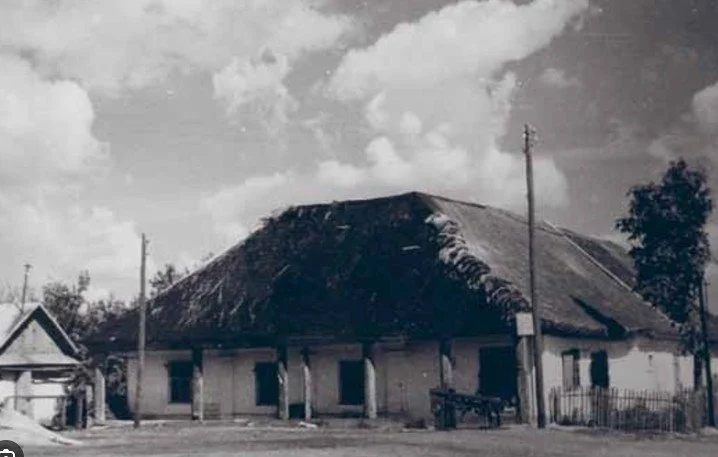
Unidentified buildings in Krasniczyn.
Righteous Non-Jews:
- Ludwik Ehrlich survived the war by being hidden with the Kucharski family in Anielpol.
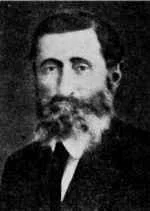
R' Benjamin Weinberg, from Krasniczyn. He lived in Tomaszow Lubelski.